
Last updated November 4, 2026
 Wrought iron
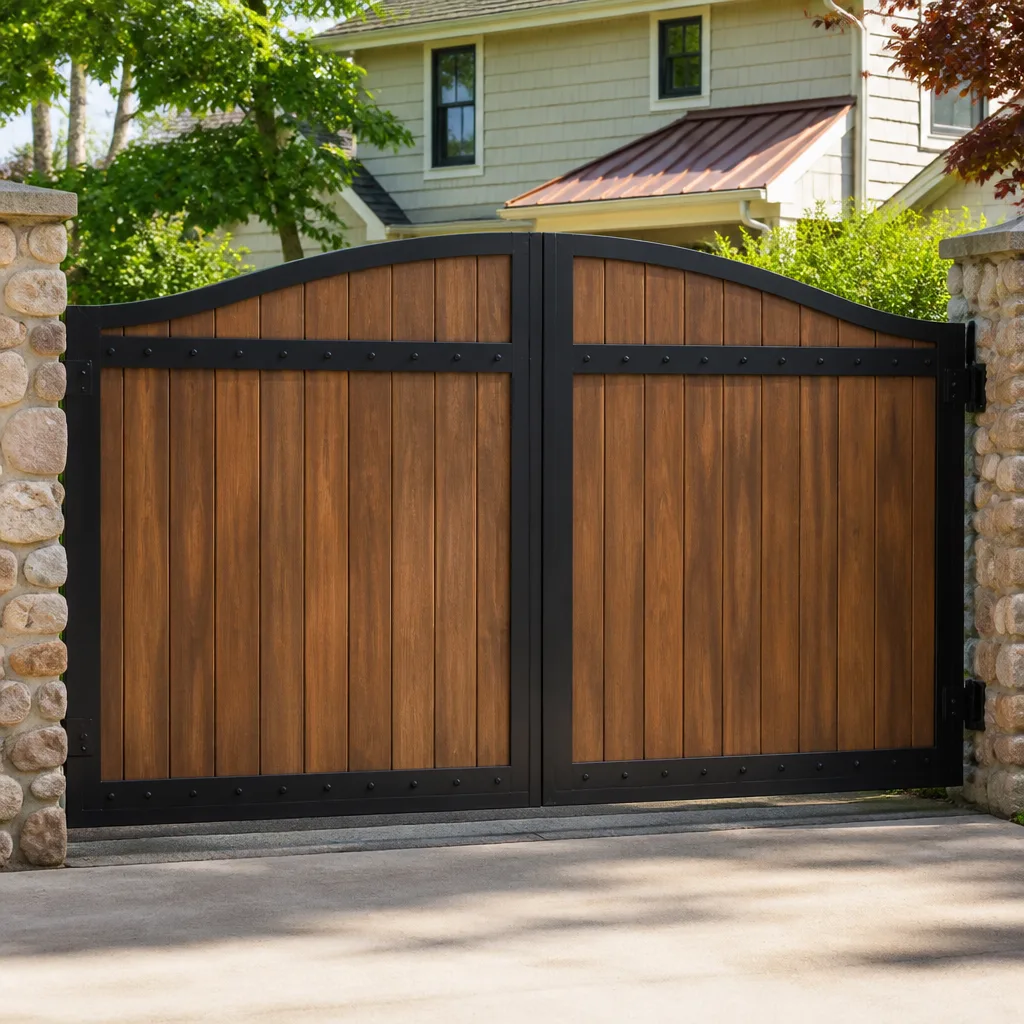 Wood & steel frame
 Farm & ranch
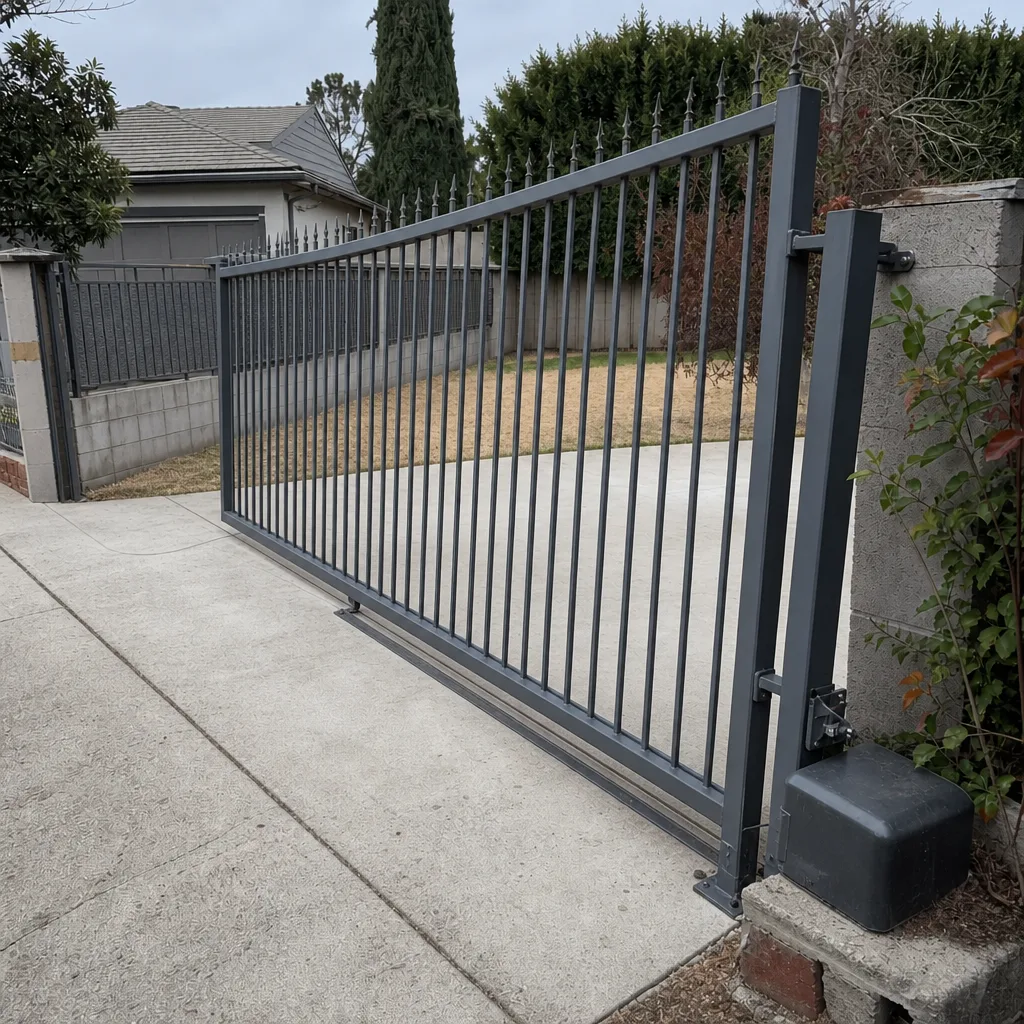
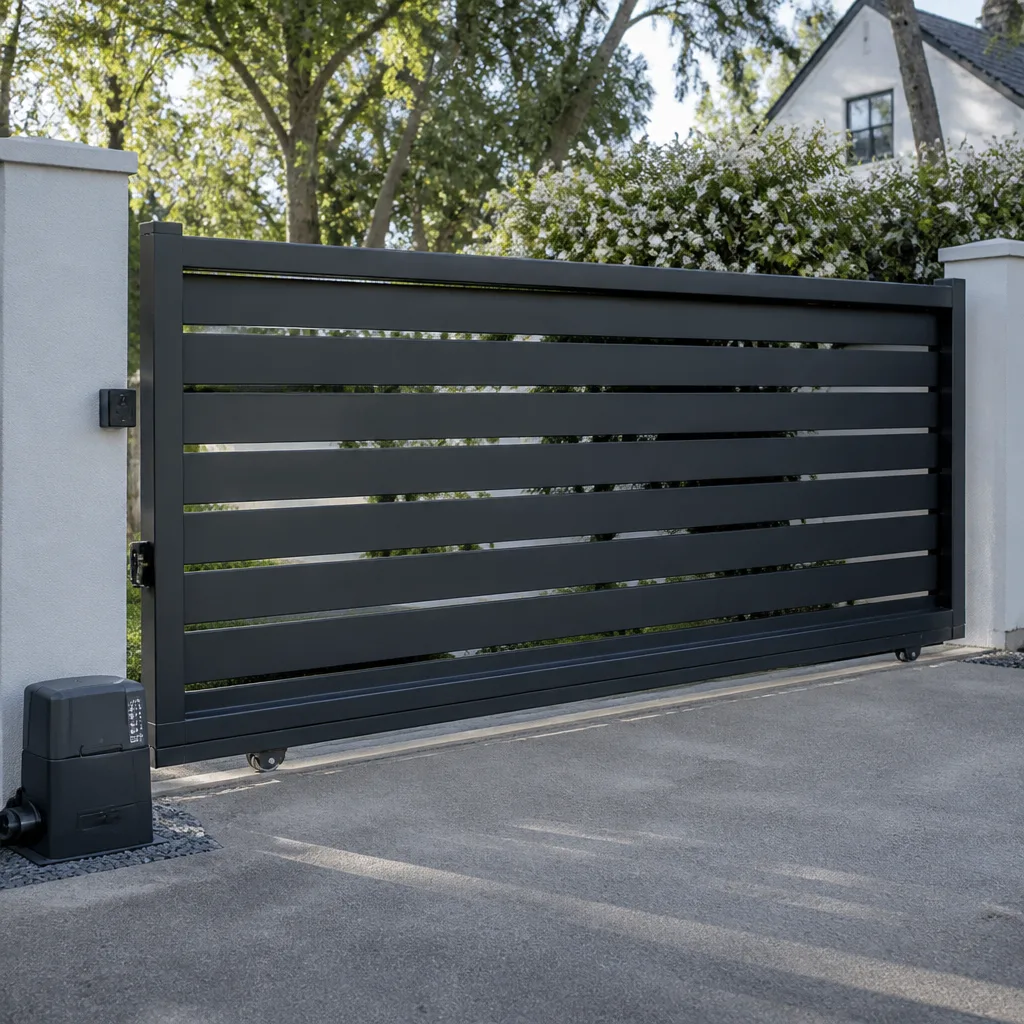 Sliding driveway gates
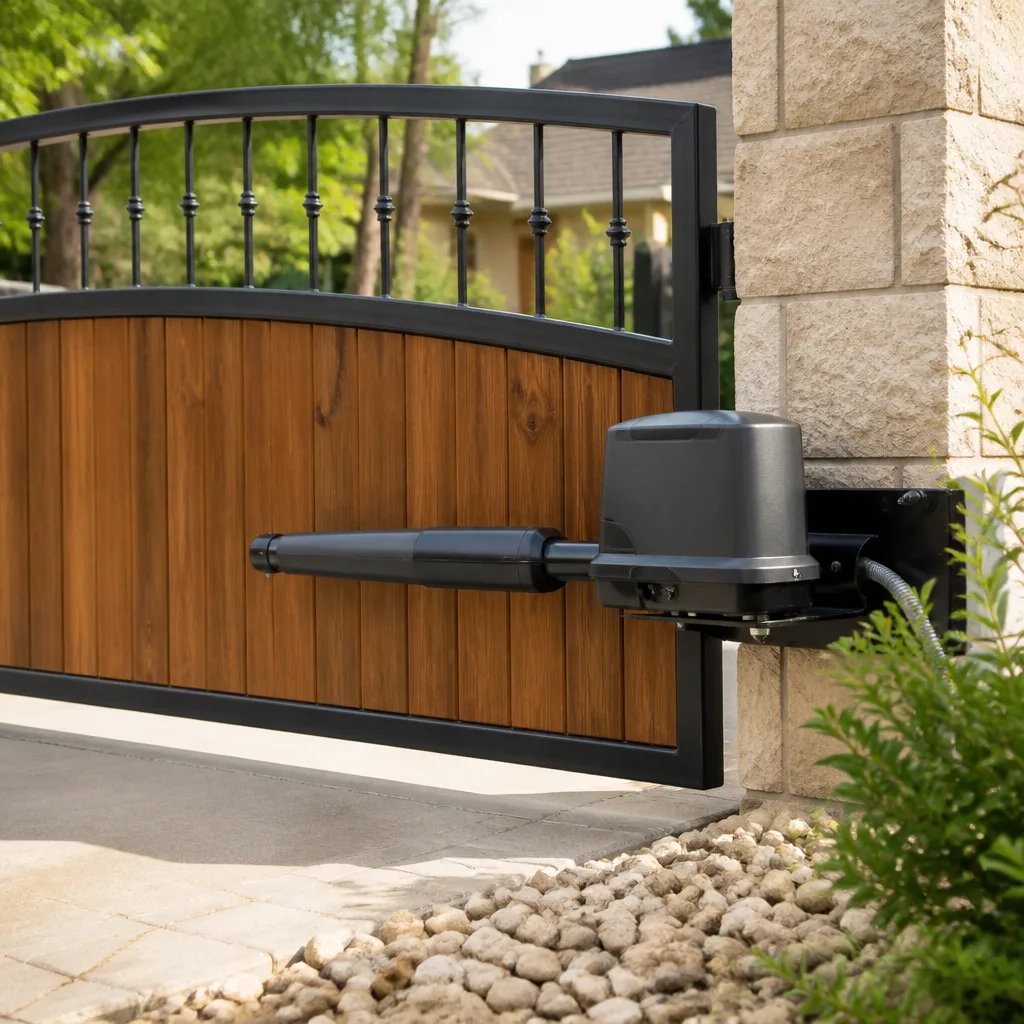 LiftMaster operators
Free on-site gate assessment - hinges, posts, and your LiftMaster or Nice gate operator checked before anything is quoted
The assessment is free and the quote is the invoice.
Get your free estimateGate Repair Maintenance Schedule: What to Do and When
The gate component most likely to strand you at 11 PM isn’t the motor. It’s a $4 battery in the access keypad that nobody checked in three years. We see this constantly across Baldwin Park, where gates work hard in sun, dust, and occasional winter rain. This guide maps out a layered maintenance schedule so nothing gets skipped until it fails. You’ll learn exactly what to check monthly, quarterly, twice a year, and annually, and why each interval matters for the long-term health of your gate system.
Styles & brands we work with
- Wrought iron
- Wood & steel frame
- Farm & ranch
- Sliding driveway gates
- LiftMaster operators
Quick Answer
A residential gate in Baldwin Park needs monthly visual checks of the track and hinges, quarterly lubrication and keypad battery testing, semiannual safety sensor alignment and backup battery load tests, and an annual deep inspection of electrical connections, operator force settings, and post stability. The full routine takes under ninety minutes per year after the initial setup. Skipping the quarterly layers is what turns a simple adjustment into a full gate repair.
Table of Contents
- Monthly Checks: The Five-Minute Visual Sweep
- Quarterly Maintenance: Lubrication and Power Essentials
- Biannual Safety Verification: Sensors and Backup Runtime
- Annual Deep Inspection: Electrical, Mechanical, and Structural
- A Month-by-Month Baldwin Park Maintenance Calendar
- The Lubrication Matrix: Matching Product to Drive Type
- Battery Backup Testing: Beyond the Indicator Light
- Annual Safety Compliance: What UL 325 Actually Requires
- Building a Maintenance Log That Catches Motor Wear Early
- Common Mistakes to Avoid
- When to Call a Professional
- Frequently Asked Questions
- The Bottom Line
Monthly Checks: The Five-Minute Visual Sweep
The monthly check is not about fixing anything. It is about seeing problems while they are still cheap. Walk out to the gate once a month, set aside five minutes, and look at the same six things every time. Most issues we diagnose on gate repair calls in Baldwin Park started as something visible weeks earlier.
Here is the exact sweep:
- Listen for new sounds. Open and close the gate once. A new squeak, grind, hesitation, or thump is the earliest signal of a mechanical issue. Note it in your log.
- Check the track or swing path. For slide gates, look for debris in the V-track and confirm the gate rolls without wobble. For swing gates, confirm nothing leans into the arc where the gate travels.
- Inspect hinge bolts and bracket bolts. Do not tighten them yourself if you are unsure of torque specs. Look for movement, rust streaks, or gaps that were not there last month.
- Look at the operator. Check for insect nests, dirt buildup on vents, or moisture inside the cover. Southern California dry-season dust is abrasive and gets into everything.
- Test the keypad and remotes. Enter the code, press each remote, and confirm the gate opens and closes smoothly both ways.
- Check warning labels and reflectors. They fade in Baldwin Park’s UV exposure. Faded safety labels are a compliance issue and easy to replace.
In our experience, the single most neglected monthly item is the track. Baldwin Park’s dry season deposits fine dust into slide-gate tracks every week from May through October. That dust mixes with whatever lubricant was applied last, creating a paste that accelerates wheel wear. A dry sweep with a stiff brush takes thirty seconds and prevents most of it.
Quarterly Maintenance: Lubrication and Power Essentials
Every three months, the maintenance routine moves from observation to action. Two things happen quarterly: the right lubrication goes on the right components, and the backup power path gets verified. Missing these is the number one driver of premature operator replacement.
Quarterly lubrication applies to:
- Hinge pins on swing gates – a light machine oil or a product rated for gate hinges. Not grease, which traps dust and turns into grinding compound in Baldwin Park’s dry season.
- Slide-gate rollers and V-track – the track itself stays dry. Clean it, do not oil it. Oil on a track attracts dust and creates sludge. Rollers with sealed bearings need no lubrication. Rollers with grease fittings get a small amount of lithium grease.
- Chain drives – a light film of chain lubricant designed for open chains. Not WD-40, which strips existing lubricant and leaves metal exposed.
- Screw drives – a thin coat of silicone or lithium grease made for screw actuators. Too much product gums the screw and trips the operator’s force sensor.
- Hydraulic operators – check the fluid level at the reservoir. Top up only with the fluid specified for that operator. Never mix types.
Quarterly is also when you replace access keypad batteries and remote batteries. Southern California heat kills alkaline batteries faster than manufacturers admit. A keypad battery that works in January can be dead by April. Replace with lithium batteries if the manufacturer allows it; they hold voltage better through Baldwin Park’s summer heat.
Test the backup battery at least once per quarter using a real load test, removing AC power and cycling the gate several times. A backup battery that runs the gate twice and quits is not a backup. Electric gate repair visits often start with a backup battery that died quietly months before anyone noticed.
Biannual Safety Verification: Sensors and Backup Runtime
Twice a year, the maintenance schedule shifts toward safety systems. Photo eyes, edge sensors, and obstruction force settings are what protect people and vehicles. These systems fail in ways that are not always obvious, and a gate that closes on a car or a person is a liability you do not want to discover by accident.
There are specific things to check:
- Photo eye alignment. Most photo eyes have an indicator light. Block the beam with your hand and confirm the gate reverses or stops. Misaligned eyes may not trigger an alarm; the gate simply will not open or will not close. If the receiver light is flickering instead of solid, the beam is marginal.
- Photo eye cleanliness. Baldwin Park dust coats lenses quickly. Wipe each lens with a dry microfiber cloth. Do not use glass cleaner, which leaves a film that scatters the beam.
- Obstruction force test. Place a solid object, like a roll of cardboard or a traffic cone, in the gate’s path. The gate should reverse on contact before the object crumples. If the gate pushes through or reverses slowly, the force setting is too high.
- Edge sensor function. On gates with contact edges, press firmly along the edge while the gate is closing. It should stop and reverse immediately. A dead spot is a serious fault.
- Warning siren and strobe. Test that the gate alerts when it moves. These are required on many automated systems and fail silently.
Because Baldwin Park sees its rain clustered between November and March, we recommend timing one biannual check for October, before the rainy season starts, and one for April, after it ends. Rain shrinks wood, swells soil, and shifts post alignment, which throws sensors out of position even when the gate itself looks fine.
Annual Deep Inspection: Electrical, Mechanical, and Structural
The annual inspection is the catch-all that prevents failures the shorter intervals cannot catch. This is when you look at what is happening inside the operator housing, inside the conduit, and at the base of the posts. It is also the best time to bring in a technician for a professional set of eyes, even if the gate feels fine.
For most homeowners, the annual check includes:
- Opening the operator cover and inspecting for insect damage, moisture, corrosion on terminals, and loose connections. Tighten terminal screws that have worked loose from vibration.
- Testing the operator’s internal force settings against the manufacturer’s specification. Operators with adjustable force should be set to the minimum that reliably moves the gate. Over-force settings mask mechanical drag and accelerate wear.
- Verifying battery condition with a load test that simulates a power outage. Many batteries pass a static voltage test but fail under load.
- Inspecting the full electrical path, including the service disconnect, conduit, and any exposed wiring. Look for insulation cracks from UV exposure and signs of rodent chewing.
- Confirming post and footing stability. Push firmly on each hinge post and the latch post. Movement of more than a quarter inch indicates a footing problem, not a hinge problem.
- Checking gate alignment and level. A gate that was perfectly level at installation can drift as soil settles. A slight sag can bind the latch or put the panel under stress.
- Greasing or replacing sealed bearings that have reached their service interval. A bearing that is starting to rumble has already failed.
Since 2015, we have handled gates of every configuration in Baldwin Park, from a simple Mighty Mule swinging a driveway gate to a full DoorKing slide system on a commercial lot. The annual inspection is where the most costly issues surface while they are still repairs, not replacements.
A Month-by-Month Baldwin Park Maintenance Calendar
Maintenance becomes easier to remember when it fits the local rhythm of the year. Baldwin Park has a Mediterranean climate with hot, dry summers and mild, wetter winters. The gate does not face freezing temperatures, but it does face extreme UV from May through September and rain from November through March.
Here is a month-by-month schedule tailored to that pattern:
- January – After December rain, check for soil movement around posts. Run the quarterly lubrication cycle. Verify backup battery.
- February – Monthly visual sweep. Clean dust from the operator housing and keypad. Replace any remote batteries that are weak.
- March – Monthly sweep. Check drain paths around the gate for debris that could pool water near the posts.
- April – Semiannual safety verification. Rainy season is ending, so photo eyes need realignment and force testing.
- May – Monthly sweep. First hot month; check that the operator housing stays ventilated and dust gets swept from the track.
- June – Monthly sweep. Keypad batteries often fail in the first sustained heat. Replace them proactively.
- July – Monthly sweep. High UV months cause seal and label degradation. Inspect wiring insulation exposed to direct sun.
- August – Quarterly lubrication. Dust is heaviest now; clean the track before lubricating anything.
- September – Monthly sweep. Look for cracks in plastic components that have baked all summer.
- October – Semiannual safety verification, timed before winter rain. Check post stability while the soil is at its driest.
- November – Monthly sweep. First rains expose drainage problems. Check that water does not pool under the operator.
- December – Annual deep inspection. Combine with any end-of-year property maintenance.
If you do nothing else, hit the two semiannual safety checks and the annual deep inspection. Those three sessions catch more than 80 percent of the failures we see on repair calls.
The Lubrication Matrix: Matching Product to Drive Type
Lubrication is not one-size-fits-all. The wrong product in the wrong place shortens component life. We have repaired enough operators in Baldwin Park to see what happens when a homeowner sprays lithium grease on a chain that needs a light oil, or coats a screw drive in a product that gums up within a month.
The matrix below matches drive type to the correct product category:
- Chain drives – Use a light, penetrating chain lubricant. It should cling to the chain without flinging off. Avoid WD-40 as a lubricant; it displaces moisture but strips the film that protects the links.
- Belt drives – No lubrication at all. Belts run dry. Any product on a belt accelerates cracking and slipping.
- Screw drives – Use a silicone-based lubricant or a light lithium grease made for screw actuators. Apply sparingly. Too much product causes the screw to bind and trips the operator’s force sensor.
- Hydraulic operators – The hydraulic fluid is the lubricant. Check the reservoir and top up with the same fluid type. Do not grease the piston or cylinder, which traps dust and damages seals.
- Hinges and pivot points – A light machine oil or a dry lubricant for hinge pins. Grease on an exposed hinge collects Baldwin Park dust and grinds the pin.
- Rollers with grease fittings – A small amount of lithium grease per fitting. Rollers with sealed bearings need nothing; if they are noisy, replace them.
- V-tracks – Keep dry. Sweep or blow out dust. Never oil a track.
Two common lubricants do more damage than good on gates: penetrating oils like WD-40 and general-purpose axle grease. The first strips protective films, and the second becomes adhesive for dust in Baldwin Park’s dry season. If you are unsure what product matches your gate’s drive type, the safest move is a professional lubrication as part of a routine gate repair appointment.
Battery Backup Testing: Beyond the Indicator Light
The indicator light on a battery backup tells you one thing: that the charger is connected to a battery. It does not tell you the battery can actually move the gate. We have tested many backup batteries in Baldwin Park that showed a solid green light and held zero usable runtime under load.
A real backup battery test runs like this:
- Note the current state. Confirm the system is on AC power and the backup is charging.
- Disconnect AC power. Use the operator’s service disconnect or the dedicated breaker for the gate.
- Cycle the gate open and close. Count how many full cycles the battery supports. A healthy backup battery should run at least five to ten complete cycles depending on gate weight, though what matters is that it matches the manufacturer’s specification for your operator.
- Watch the speed. If the gate moves noticeably slower on battery, the battery is weak, even if it completes cycles.
- Check charge state after restoration. Reconnect AC power and note how long the battery takes to return to full. A battery that charges too slowly or too quickly after a load test is near end of life.
Battery runtime degrades with age and heat. A battery that spent two Baldwin Park summers in an unshaded operator housing may lose most of its capacity in as little as three years. Testing quarterly, not annually, is what catches it before a power outage leaves you stranded with a dead gate and no manual release key handy.
Annual Safety Compliance: What UL 325 Actually Requires
UL 325 is the standard that governs automated gate safety in the United States. It sets requirements for entrapment protection, which is the system’s ability to stop and reverse before pinning a person. While gate owners are not expected to conduct certified testing themselves, understanding the standard’s core requirements helps you catch problems early and speak the same language as a technician.
The key entrapment protection requirements reduce to this: an automated gate must have at least two independent mechanisms to prevent entrapment. That typically means a combination of the following:
- Inherent entrapment protection – the operator’s force sensor or current monitoring, which detects resistance and reverses the gate.
- External entrapment protection – devices such as photo eyes and contact edges that detect an obstruction physically.
- Audio and visual alarms – a siren or strobe that activates before and during gate movement, on systems where continuous pressure activation is not used.
Your annual check should include a functional test of each of these. Verify the force sensor reverses the gate, the photo eye detects an obstruction anywhere across its path, and the contact edge reverses on pressure at any point. If your gate dates from before the current UL 325 revisions or lacks any of these protections, contact a professional to discuss bringing it into compliance. This is not a cosmetic issue; it is a liability issue that affects your insurance and the safety of anyone on the property.
Some Baldwin Park properties with older operators, including commercial installations with legacy DoorKing or Elite systems, predate current safety requirements. A technician familiar with the brand can tell you what needs upgrading without replacing the entire operator.
Building a Maintenance Log That Catches Motor Wear Early
A maintenance log sounds like paperwork, but it is the most practical tool you have. The earliest sign that a gate motor is wearing out is not a failure. It is a change: a cycle that takes two seconds longer, a sound that is slightly different, a force test that needs more pressure than it did six months ago. Without a baseline, these changes are invisible.
Your log does not need to be elaborate. A simple notebook or a note on your phone works. Record these items each time you do maintenance:
- The date and what you did.
- How long a full open-to-close cycle takes, measured in seconds. A gradual increase in cycle time often means motor wear or increased mechanical drag.
- Any sounds noticed during operation.
- How many cycles the backup battery supports on the quarterly load test.
- The force setting, if you adjusted it.
- Anything replaced or lubricated.
Review the log every six months. A gate that took eight seconds to open in January and nine seconds in July has something wearing or dragging. Finding it then, as a small mechanical issue, is a fraction of the cost of replacing a burned-out operator motor that had been fighting increasing resistance for a year.
We tell every customer in Baldwin Park the same thing: the log is what turns gate maintenance from guessing into diagnosis. It is how you catch a failing motor before it becomes a motor replacement, and it is the first thing a technician looks at when they arrive.
Common Mistakes to Avoid
- Using the wrong lubricant. Spraying a penetrating oil on a chain drive, or greasing a dry track, accelerates wear instead of preventing it. Match the product to the component and when in doubt, leave it dry until a professional confirms.
- Assuming the indicator light means the backup works. The light only confirms charging. A load test is the only way to know the battery can actually move the gate.
- Ignoring a small new sound. A faint squeak or a slightly slower cycle is the cheapest possible warning. Waiting until the gate fails converts a $50 adjustment into a $900 operator replacement.
- Testing sensors without cleaning them first. Baldwin Park dust on a photo eye lens mimics misalignment. Clean the lens, then test. A dirty lens that triggers a false obstruction is not a failed sensor.
- Tightening every bolt you see. Over-tightening hinge bolts and bracket bolts creates stress fractures. Most gate hardware has a specified torque range.
- Lubricating a hydraulic operator like a mechanical one. Grease on a hydraulic piston destroys seals. The fluid reservoir is the only place that gets a top-up.
- Doing maintenance without a log. Without a baseline, you cannot detect the gradual changes that precede failure. The log is the difference between catching motor wear early and discovering it when the gate stops mid-cycle.
When to Call a Professional
Some maintenance tasks are genuinely DIY. Others are not. You should call a professional when the gate makes a grinding or popping sound, when the force test fails, when a backup battery shows signs of heat damage or swelling, when you find loose or corroded electrical connections inside the operator, or when posts show any movement. Electrical work inside an automated gate operator carries genuine risk. The safety systems that prevent a gate from crushing someone are calibrated, not just installed, and calibration errors are invisible right up until they matter.
Gate Repair Baldwin Park offers free estimates in Baldwin Park. Call (855) 679-6795 for a professional maintenance visit or any gate repair need. We answer 24/7. Fast dispatch from 7am to 7pm, Sunday through Friday.
Frequently Asked Questions
A residential gate should get a professional inspection once a year, plus homeowner-level maintenance monthly, quarterly, and semiannually. The annual check catches electrical and structural issues, while the shorter intervals handle lubrication, battery testing, and sensor alignment.
An unlubricated gate wears faster at every moving joint. Hinge pins and rollers develop friction, the operator works harder to move the gate, and the motor’s life drops significantly. In Baldwin Park’s dusty season, lack of the right lubricant on the right part shortens component life by more than most people expect.
Disconnect AC power at the breaker or service disconnect, then cycle the gate open and close several times. A healthy backup battery should run multiple complete cycles at normal speed. If the gate moves slowly or quits after two cycles, the battery needs replacement. The indicator light alone tells you nothing about runtime.
Yes. Baldwin Park’s hot, dry summers accelerate UV damage to plastic components and drain battery life faster, while winter rains shift soil and affect post stability. The maintenance calendar above is built around these local patterns, with semiannual safety checks in October and April.
No. Slide-gate tracks stay dry. Lubricating a V-track attracts dust and creates an abrasive paste that accelerates roller wear. Sweep or blow out the track monthly and leave it dry.
We work on LiftMaster, FAAC, BFT, Linear, Viking, Ghost Controls, DoorKing, Elite, and Mighty Mule systems. We work on the brand you already have, whether it is a Mighty Mule on a driveway or a FAAC system on a commercial lot. Call (855) 679-6795 for a free estimate.
The Bottom Line
Gate maintenance is not a single annual task. It is a layered schedule: monthly eyes, quarterly lubrication and batteries, semiannual safety verification, and an annual deep inspection. Each layer catches failures the shorter intervals cannot. The log you keep ties it all together by recording baseline performance so changes become visible while they are still cheap to fix. For Baldwin Park homeowners and property managers, the schedule above fits the local climate and the way gates actually age here. The gate component most likely to strand you is almost never the motor. It is the small thing nobody checked.
Written by the team at Gate Repair Baldwin Park, serving Baldwin Park since 2015.
See the difference
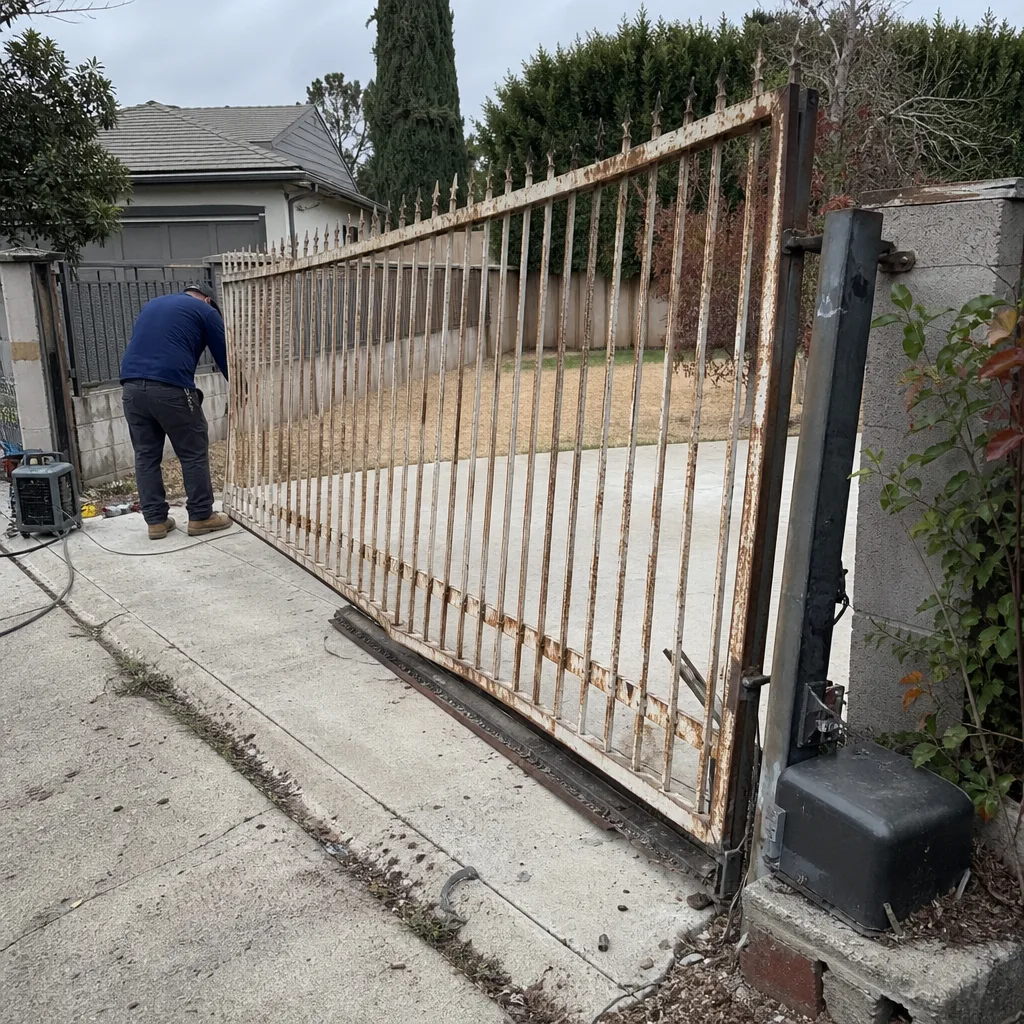 Before
 After
 Before
 After
 Before
 After