
Last updated November 4, 2026
 Wrought iron
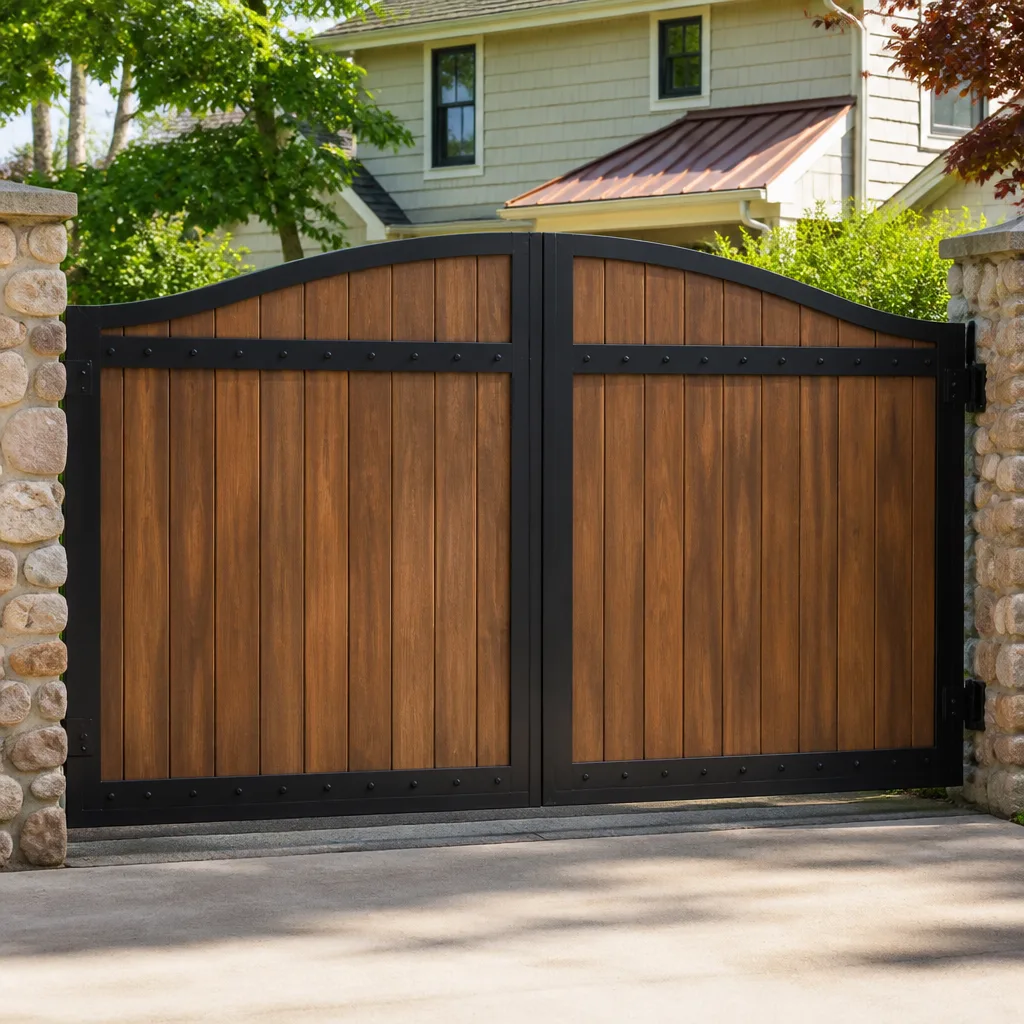 Wood & steel frame
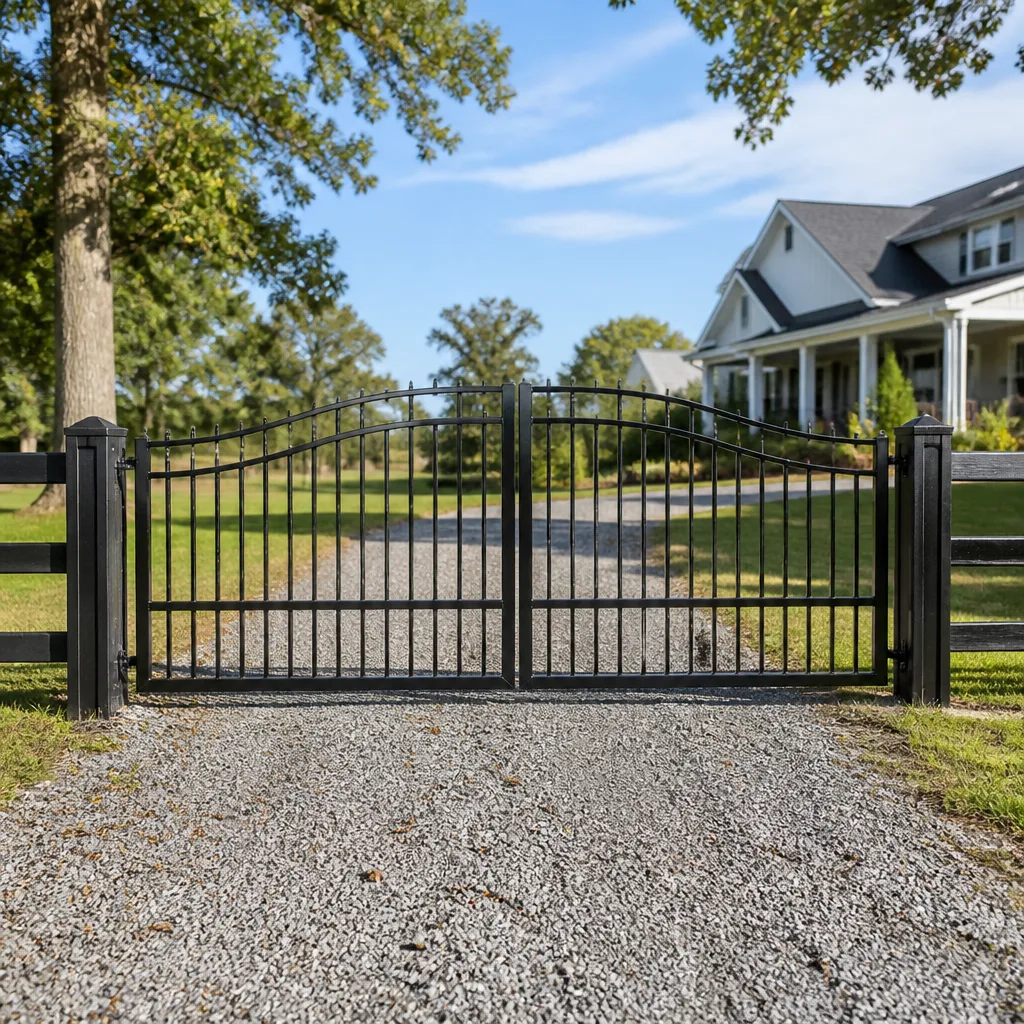 Farm & ranch
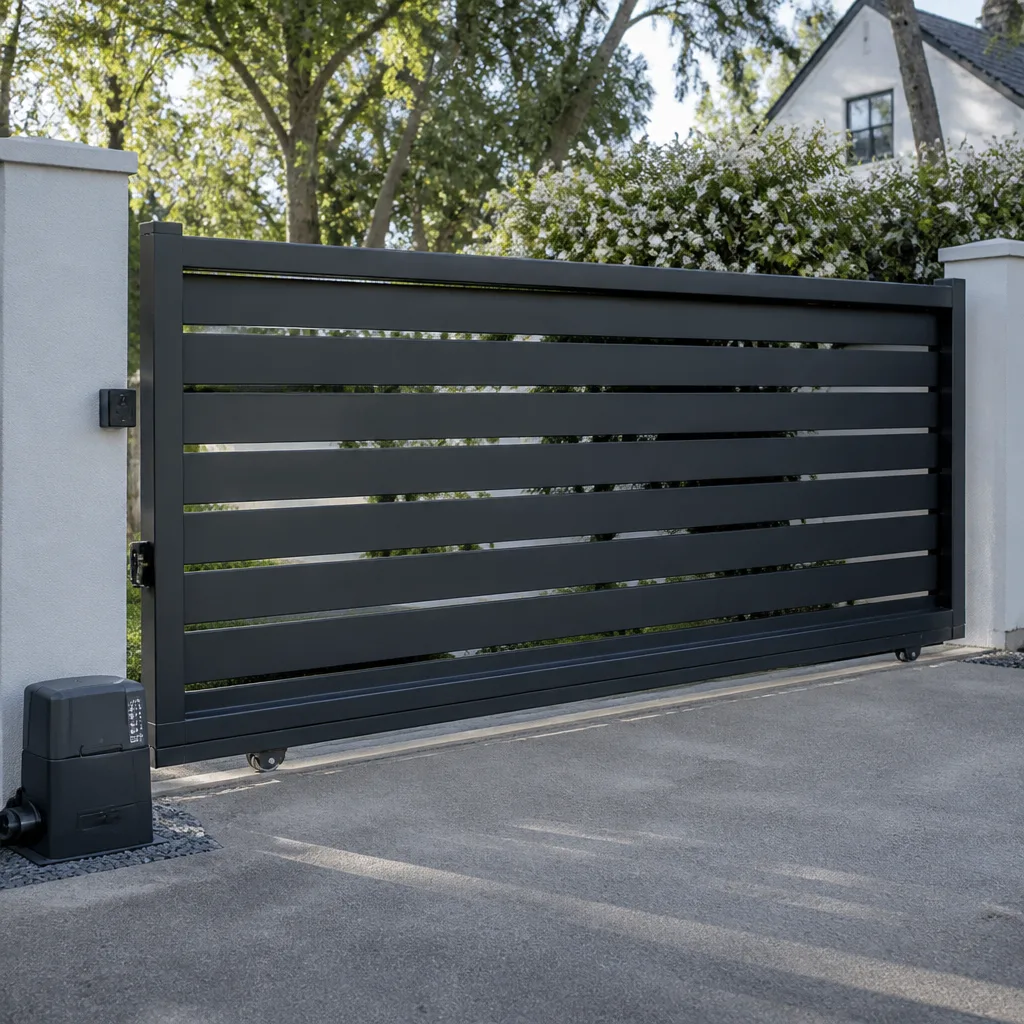 Sliding driveway gates
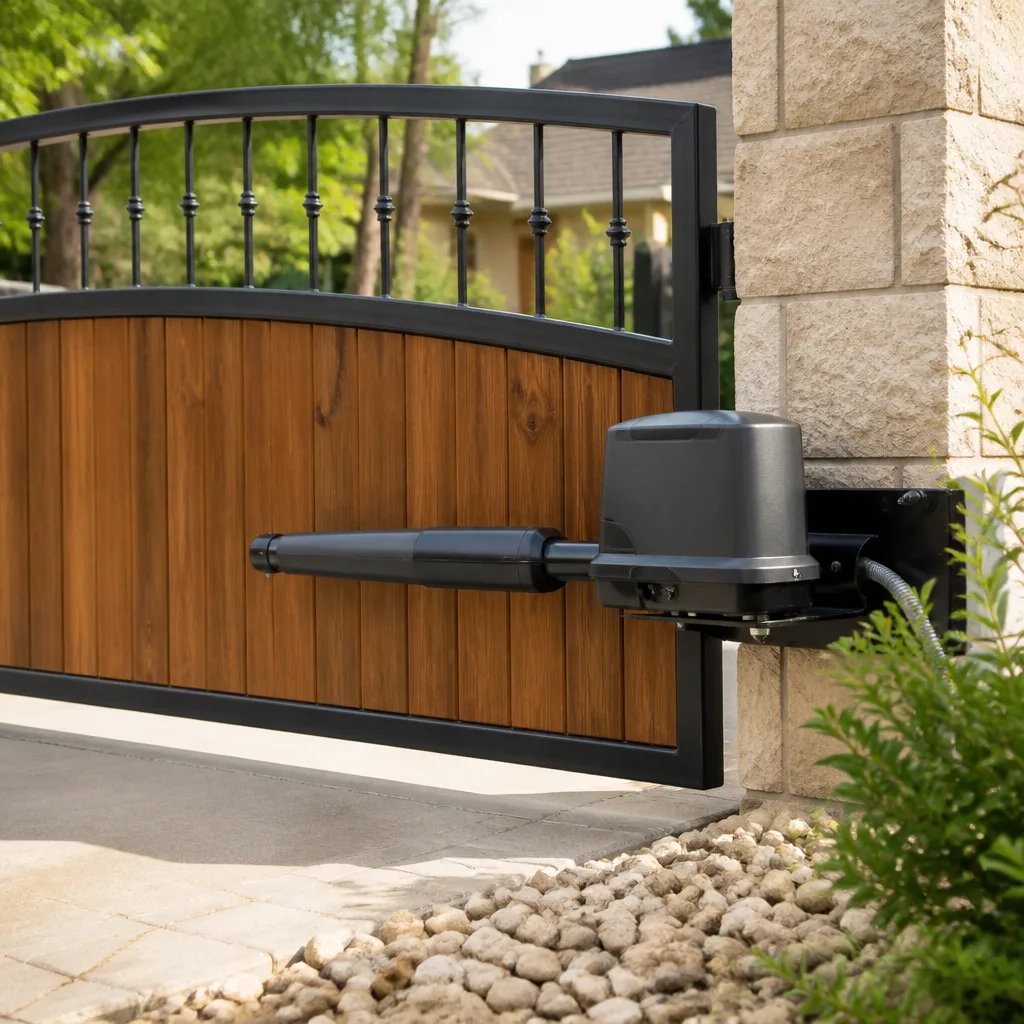 LiftMaster operators
Free on-site gate assessment - hinges, posts, and your LiftMaster or Nice gate operator checked before anything is quoted
The assessment is free and the quote is the invoice.
Get your free estimateGate Repair Warning Signs: A Baldwin Park Homeowner’s Reference Guide
A gate that reverses for no apparent reason isn’t malfunctioning randomly. It’s responding to a safety sensor trigger, and diagnosing which one, a photo eye, a pressure sensor, or a loop detector, in the first five minutes prevents a service call about 30% of the time. Most Baldwin Park homeowners we talk to fall into one of two camps: they either panic over the normal creak of a settling gate or they ignore a slow-developing failure until the gate simply stops moving. This guide is meant to cut through both kinds of confusion. You’ll learn which symptoms actually matter, what they point to, and how to describe them to a technician so the problem gets fixed on the first visit, not the second.
Styles & brands we work with
- Wrought iron
- Wood & steel frame
- Farm & ranch
- Sliding driveway gates
- LiftMaster operators
Quick Answer
The most common gate repair warning signs in Baldwin Park are slow or jerky movement, new grinding or squealing sounds from the motor, a gate that reverses mid-cycle for no visible reason, and remote controls that only work from a few feet away. These typically point to worn operator motors, misaligned safety sensors, failing control boards, or power supply problems. A gate that stops halfway or won’t stay closed is usually a limit switch issue; a gate that groans at the hinge is often structural fatigue, not just noise.
Table of Contents
- Symptom-to-Diagnosis Reference Table
- Normal Gate Settling vs. Structural Weld Fatigue
- Electrical Warning Signs You Can See Without a Meter
- Safety Hazards vs. Convenience Issues
- How to Document and Communicate Symptoms Accurately
- What We See on Viking, Ghost Controls, DoorKing, and Elite Systems
- Common Mistakes to Avoid
- When to Call a Professional
- Frequently Asked Questions
- The Bottom Line
Symptom-to-Diagnosis Reference Table
Before you call us, run through what your gate is actually doing. Most gate failures in Baldwin Park give off clear signals weeks or even months before they become full breakdowns. Here’s a reference table we’ve built from years of diagnosing residential and commercial gates across the area.
- Grinding or whining during travel: Worn operator motor bearings or a misaligned drive chain. Common on older swing and slide gate setups, especially when the gate has been running for years on the same equipment.
- Squealing at the hinge points: Lack of lubrication on hinge pins, or early-stage weld fatigue where the hinge plate meets the gate frame. If lubrication doesn’t quiet it within a day, the hinge is spreading.
- Slow travel speed: A tired operator motor, low voltage at the operator, or friction in the track. On slide gates, we often find the v-track has accumulated debris that’s dragging the gate down.
- Jerky or stuttering movement: A gear train going out in the operator, or a capacitor on the way out. Ghost Controls operators sometimes show this when the upper limit setting drifts and the gate stutters against the stop.
- Gate reverses for no visible reason: The safety sensor is triggering. It may be a misaligned photo eye, a pressure sensor set too tight, or a loop detector picking up a false reading. This is the symptom most often misdiagnosed as a control board issue.
- Remote range shrinking to a few feet: Antenna interference, a failing battery in the remote, or a receiver module on the decline. Viking systems with older receiver boards are particularly prone to range loss as the receiver’s capacitors age.
- Gate stops mid-cycle: Limit switches out of adjustment, or an obstruction sensor that’s tripping falsely. On DoorKing swing gates, a worn limit switch arm can cause the gate to stop at random points along its arc.
- Thumping or banging at full open or close: Missing or hardened limit stops, or an operator that isn’t decelerating properly at the ends of travel. Elite operators that lose their soft-close programming will slam into the stops.
Each of these symptoms maps to a likely cause, but there’s overlap. Two symptoms together usually point to one root problem. For example, slow movement plus a burning smell from the operator almost always means the motor is drawing too much current and about to fail. In Baldwin Park, where summer heat pushes gate operators hard during peak hours, motors degrade faster than the published specs suggest. A gate repair diagnostic should account for that local demand.
Normal Gate Settling vs. Structural Weld Fatigue
Gates settle. Every gate, from a lightweight Mighty Mule on a Baldwin Park driveway to a heavy commercial DoorKing slide gate, shifts over time. The question is whether the sounds and movements you’re noticing fall inside normal settling or outside it.
Normal settling sounds:
- A soft click when the gate starts moving after sitting idle for a while.
- An occasional low groan during the first cycle of the day, which fades as the gate repeats the cycle.
- Slight diagonal sag on a swing gate that’s visible only when you look at it from the side and compare it to the line of the fence.
Structural fatigue, the kind that leads to sudden failure:
- A sharp, high-pitched squeak at the hinge that gets louder each week and doesn’t respond to an oiling.
- Diagonal sag that exceeds about three inches at the latch side, which in Baldwin Park’s dry inland air means the metal itself is fatiguing rather than the hinges simply loosening.
- Visible hairline cracks at the weld points, especially around the hinge plate, the latch post, or wherever the operator bracket bolts to the gate frame.
- A vibration in the gate when it moves that you can feel through the fence line, not just hear.
If you’re seeing any of the second list, the gate is approaching a mechanical failure. It won’t necessarily fall, but it will shear or drop at the hinge, bind in the track, or tear an operator bracket off the frame. Those are significant electric gate repair jobs, and they’re cheaper to prevent than to fix after the fact.
Electrical Warning Signs You Can See Without a Meter
You don’t need to be a technician to spot electrical problems on a gate operator. Most control boards and power connections are behind a cover, and opening that cover is a homeowner’s right. Here’s what to look for.
- Burn marks on the control board: Scorch marks, blackened traces, or a melted relay are definitive signs the board has arced or overheated. The board may still function intermittently, but it’s failing and should be replaced before it takes out other components.
- Corroded wire terminals: Green or white crusty buildup on the screw terminals where wires land. In Baldwin Park’s dry climate, this is less common than in coastal areas, but it still happens on gates with irrigation overspray or poor sealing. Corrosion raises resistance, which causes voltage drop and intermittent behavior.
- Tripped breaker on the gate circuit: A gate on its own dedicated circuit that trips more than once is telling you something. A single trip after a storm could be a fluke. Repeated trips point to a ground fault, a failing capacitor, or a motor winding shorting against the operator case.
- Warm or hot operator housing: The external metal of the operator box should be warm, not hot, after a normal cycle. If it’s uncomfortable to lay a hand on after the gate has run a few times, the motor is drawing excessive current.
- Flickering or dimming gate post lights: If the lights that run off the gate’s low-voltage circuit are flickering, the transformer or the wire run is degrading. That same low-voltage feed often powers the operator’s logic board.
- Battery warning light on the operator: Most automated gate operators have an internal battery to hold the memory and, on some models, to power the gate through brief outages. A warning LED that stays lit means the battery has failed and should be replaced as part of the service call.
Any of these signs means the electrical side of the gate needs attention before it cascades. A board that arcs badly enough can take out the transformer and the motor together, tripling the repair cost.
Safety Hazards vs. Convenience Issues
Not every gate problem is urgent. Some are annoyances. Others are dangerous. Knowing the difference matters, because a gate that’s a safety hazard will keep failing until someone gets hurt.
Convenience issues (inconvenient, not dangerous):
- Remote range shrinking to 20 feet or less. You can still open the gate; it’s just annoying.
- A gate that runs slower than it used to. It still opens and closes fully; it just takes longer.
- A gate that doesn’t fully close the last two inches. Annoying for privacy, but not a crush hazard.
- Squeaking hinges that respond to lubrication. Normal wear, not a structural problem.
Safety hazards (fix immediately):
- A gate that auto-reverses while closing in the middle of the travel with no person or vehicle near it. The obstruction sensing is failing, which means it could also fail to reverse when a person or car is actually present.
- A swing gate that won’t stay in the fully open position and drifts back into the path of a car. The gate will be hit; the question is when.
- A slide gate that can be pushed off the track by hand. If a child or an adult’s full weight can shift it, the guide rollers are worn beyond tolerance.
- Exposed wiring at the gate, especially 120V line voltage near the operator. Any gate wiring that’s cracked, frayed, or chewed by rodents is a shock and fire risk.
- A gate that opens on its own at random intervals, without a remote or keypad entry. The logic board is sending false commands. It could close at random too.
Our rule: if the gate’s behavior is unpredictable and involves the gate moving when it shouldn’t, that’s a safety issue. Call a specialist. If it’s merely slower or less convenient than it used to be, you have time to schedule a diagnosis. For either, Baldwin Park homeowners can reach us for a walkthrough of what they’re seeing.
How to Document and Communicate Symptoms Accurately
The single most valuable thing you can do before calling a gate technician is to observe the gate like a diagnostician would. The way you describe a symptom determines whether we bring the right part on the first trip or need a second visit. Here’s a simple process we recommend.
- Note the exact behavior. “The gates open but then reverse before they reach full open.” That’s a limit or sensor issue. “The gates don’t respond at all from the wall button but do from the remote.” That points to the push-button circuit or its wiring. Vague descriptions like “it’s broken” or “it doesn’t work right” don’t help anyone.
- Note the time and conditions. Does it happen only in the morning, only after rain, only when the sun is on the operator box? Baldwin Park’s heat can trigger thermal shutdowns in older operators, and that’s a key diagnostic clue. A gate that fails at 3 p.m. in August but works fine at 7 p.m. is thermally shutting down.
- Note the sound, if any. Record a short video on your phone. Ten seconds of the gate’s sound tells a trained ear more than a paragraph of description. We can usually distinguish a failing motor bearing from a worn gear from a misaligned chain over the phone.
- Check the indicators. Look at the control board LEDs. Most operators have a diagnostic LED or a series of them that flash error codes. One slow flash versus three fast flashes means different things. Note the pattern and tell the tech.
- Test all entry methods separately. Wall button, keypad, remote, vehicle loop, exit wand. If the gate works from one input but not another, the problem is in that specific input device, not the operator itself. That saves you from paying for an operator diagnosis when the problem is a $40 keypad.
We’d rather have a homeowner spend ten minutes doing this than guess. The more precisely you describe the failure, the more likely our first visit ends with a fixed gate. That’s especially true on multi-brand systems, because a DoorKing slide gate behaves very differently from an Elite swing gate when a limit switch fails.
What We See on Viking, Ghost Controls, DoorKing, and Elite Systems
Different brands fail in different ways, and knowing the brand profile helps narrow a diagnosis fast. We work on all of these systems in Baldwin Park, and we see patterns.
Viking: Viking operators are common on commercial and estate gates. Their weak points are the receiver modules and the older control boards. We see range loss on remotes more often on Viking units than on most other brands, and the board’s relay contacts tend to pit over time, causing intermittent start failures. A Viking gate that clicks but doesn’t move is usually a relay issue, not a motor issue.
Ghost Controls: Ghost Controls makes a lot of residential swing gate operators. Their characteristic failure is set screw slippage on the arm clamp, which causes the gate to lose travel limits and open partially or reverse early. The motor itself is typically solid; the mechanical linkage is what drifts. Homeowners often replace the remote batteries thinking the operator is unresponsive, when the actual issue is the gate has drifted off its programmed limits and the unit is in fault mode.
DoorKing: DoorKing dominates commercial slide and swing gate installs. Their contactors and limit switches wear before the motors. On a DoorKing slide gate, a chattering contactor or a limit switch that seems to move on its mount is the most common reason a gate stops midway. The brand is rugged, but it builds enough cycles that electromechanical parts simply wear out.
Elite: Elite operators are popular on high-end residential swing gates. We see capacitor failures more on Elite than on other brands, which shows up as a gate that groans and moves slowly, or a motor that hums but can’t start the gate moving. Elite’s soft-close programming can also drift if the unit loses power repeatedly, and the gate will begin slamming at the end of travel.
Our point in sharing this: there’s no generic gate doctor visit that catches these nuances. We service what’s on your property because Gate Repair Baldwin Park works on all of these brands, not just one or two.
Common Mistakes to Avoid
- Lubricating an operator motor. Gate operators are sealed units. Spraying lubricant into the motor housing does nothing for the bearings and can contaminate the commutator. Hinge points take grease; motors don’t take anything.
- Adjusting the safety sensors without understanding them. Turning the sensitivity dial up to stop nuisance reversals masks the real problem. You may get the gate to close, but you’ve disabled the one thing standing between the gate and a person caught under it.
- Replacing remotes to fix range loss. Usually the receiver, not the remote, is the failing half of the equation. A new remote may improve things a little at first, but it won’t fix a receiver that’s aging out.
- Ignoring a tripped breaker. Resetting a breaker that feeds the gate and moving on isn’t a fix; it’s a wish. Every trip is a symptom. The third or fourth trip could coincide with a seized motor that then burns out the control board.
- Hiring a general handyman for brand-specific diagnostics. A handyman can replace a hinge. Diagnosing a Ghost Controls limit drift or a DoorKing contactor failure takes brand familiarity. We see handymen replace perfectly good operators because they didn’t recognize a simple relay issue.
- Waiting until the gate is completely dead to call. The symptom you noticed six weeks ago, the slow travel, the occasional reversal, the burning smell, was the gate telling you something. Repairing a failing part costs less than replacing a burned-out system.
- Assuming all gate noise is bad noise. A gate makes noise. Some is normal. Learning the difference, or having a professional tell you once, saves you from chasing sounds that don’t matter.
When to Call a Professional
Call when the gate reverses without cause, when it stays put instead of moving, when you see burn marks on the board, or when the gate can be moved by hand in any direction it shouldn’t move. Call also when the remote range is falling off a cliff, not gradually, but week over week. A specialist diagnosis catches a failure while it’s still cheap to fix. We’ve seen too many Baldwin Park gates fail outright because a $30 part was ignored for two months and then took a $900 operator down with it. Gate Repair Baldwin Park offers free estimates in Baldwin Park. Call (855) 679-6795. We answer 24/7. Fast dispatch from 7am to 7pm, Sunday through Friday.
Frequently Asked Questions
Your gate is responding to a safety sensor trigger, and the cause is usually one of three things: a misaligned photo eye, a pressure sensor set too sensitive, or a loop detector picking up interference. In Baldwin Park, where many properties have separate pedestrian gates near the vehicle gate, we also see cross-talk where the pedestrian gate’s loop interferes with the vehicle gate’s loop. Start by cleaning the photo eye lenses and checking that nothing has shifted the sensor brackets. If the problem persists, the sensor needs alignment or replacement, not adjustment to mask it.
Most gate repairs in Baldwin Park fall between $225 and $950 depending on the part and the gate type. A basic hinge replacement or sensor alignment runs toward the lower end, a new control board or operator motor toward the higher end, and a full operator replacement can exceed that range. The price is always set per job by the written estimate, which you approve before any work starts. Call (855) 679-6795 for an exact quote, the estimate is free.
In most cases, yes. We answer 24/7 and dispatch technicians from 7am to 7pm, Sunday through Friday. Same-day service is available for most gate failures in Baldwin Park, though the exact arrival time depends on the day’s schedule when you call. Call (855) 679-6795. We answer 24/7. Fast dispatch from 7am to 7pm, Sunday through Friday.
No. A gate that creaks on the first cycle of the day or clicks when it starts moving is often just settling. The sounds that matter are new sounds that get louder, squeals at the hinge that don’t respond to lubrication, and any grinding from the motor. If the gate is getting louder week over week, that’s a problem worth a diagnostic.
We work on the nine major brands most commonly installed in Baldwin Park and across Southern California, including LiftMaster, FAAC, BFT, Linear, Viking, Ghost Controls, DoorKing, Elite, and Mighty Mule. Whether you have a residential Ghost Controls swing gate or a commercial DoorKing slide gate, we can diagnose and repair it without swapping it out for whatever we happen to sell.
First, check the breaker that feeds the gate. If it’s tripped, leave it off and call us, resetting it repeatedly risks further damage. If the breaker is fine, check the operator’s power LED and note any error codes flashing. Then call (855) 679-6795 and describe what you see. We answer 24/7, and a call outside dispatch hours is booked into the next opening, Sunday through Friday, 7am to 7pm.
The Bottom Line
Gates speak in symptoms, and most Baldwin Park homeowners misread them one of two ways: hearing failure in normal sounds, or hearing nothing in the sounds that matter. The pattern that should move you to action is any new sound or behavior that gets worse over weeks, any electrical visible damage, and any unpredictability in how the gate moves. Those are the signs that a small repair is becoming a large one. If you’re seeing any of them, call (855) 679-6795 for a free estimate. We answer 24/7, fast dispatch from 7am to 7pm, Sunday through Friday.
Written by the team at Gate Repair Baldwin Park, serving Baldwin Park since 2015.
See the difference
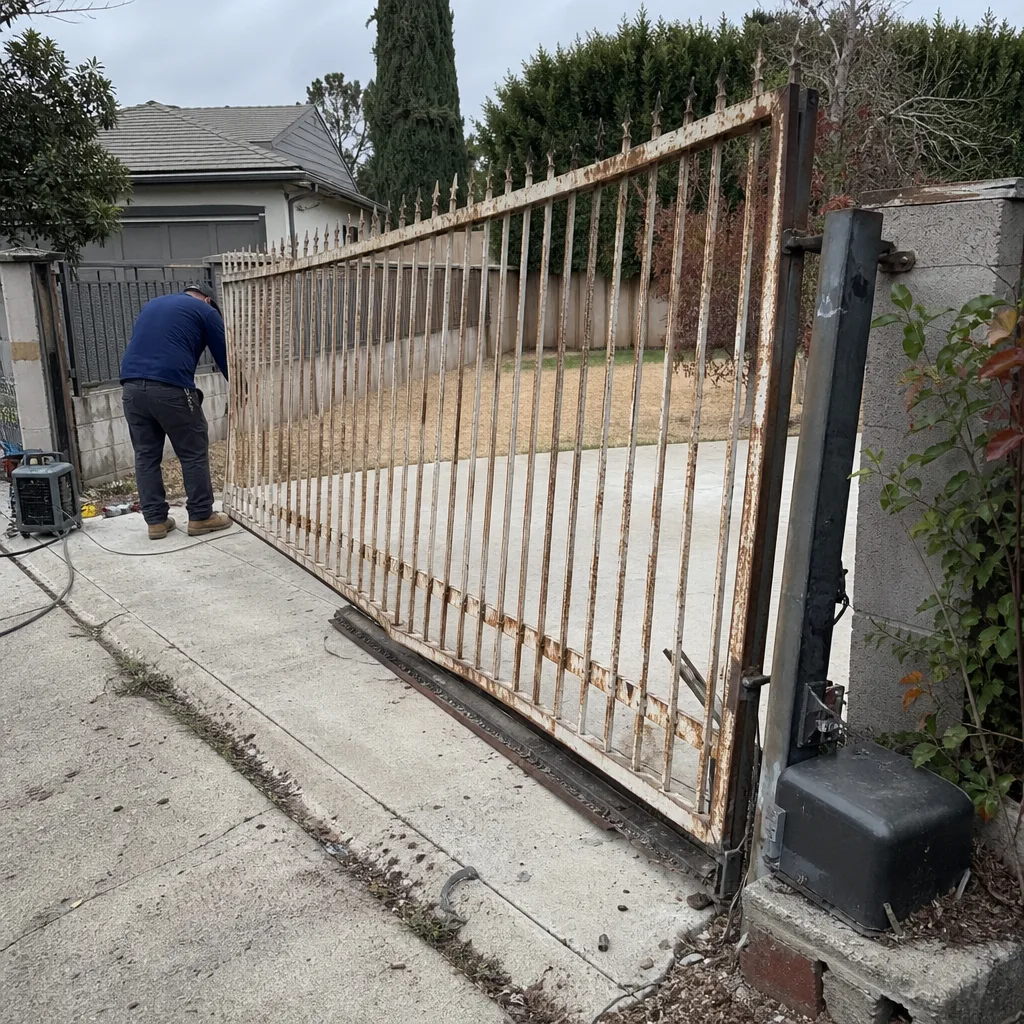 Before
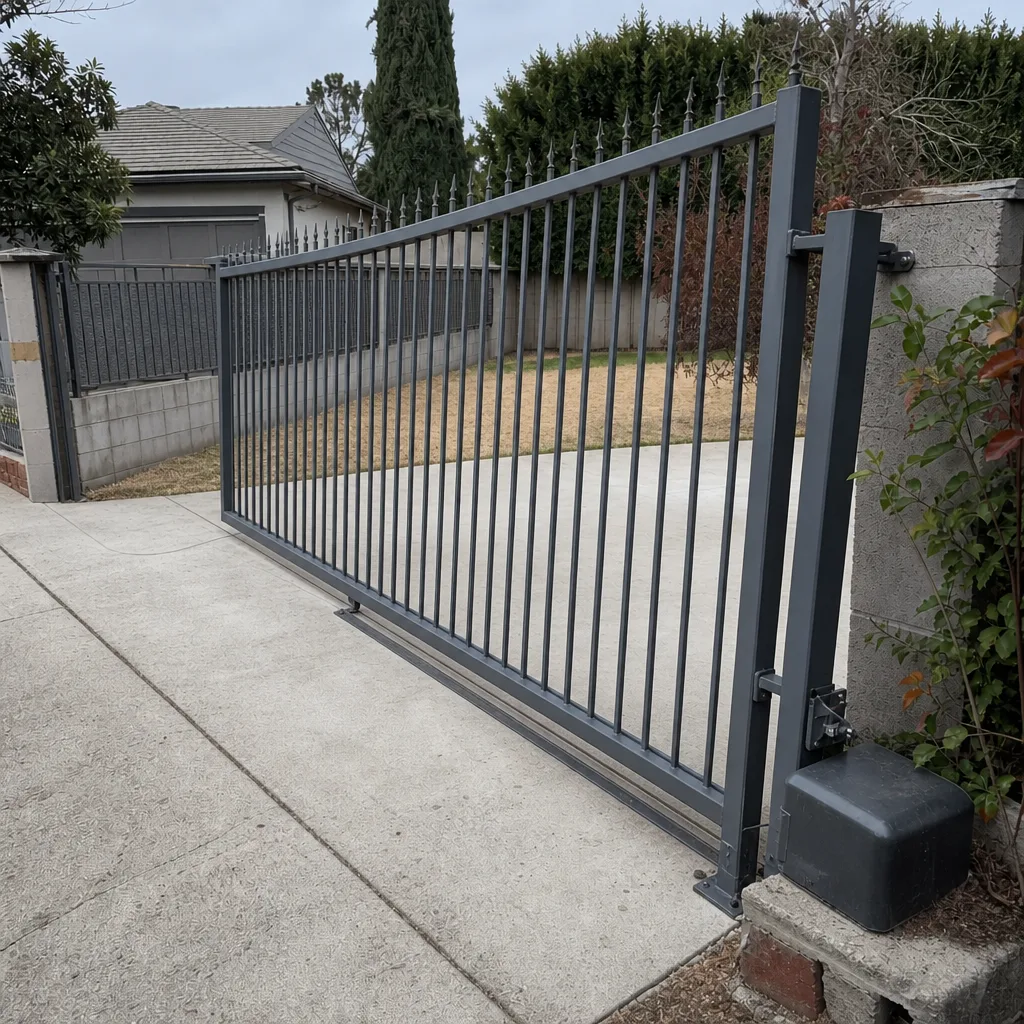 After
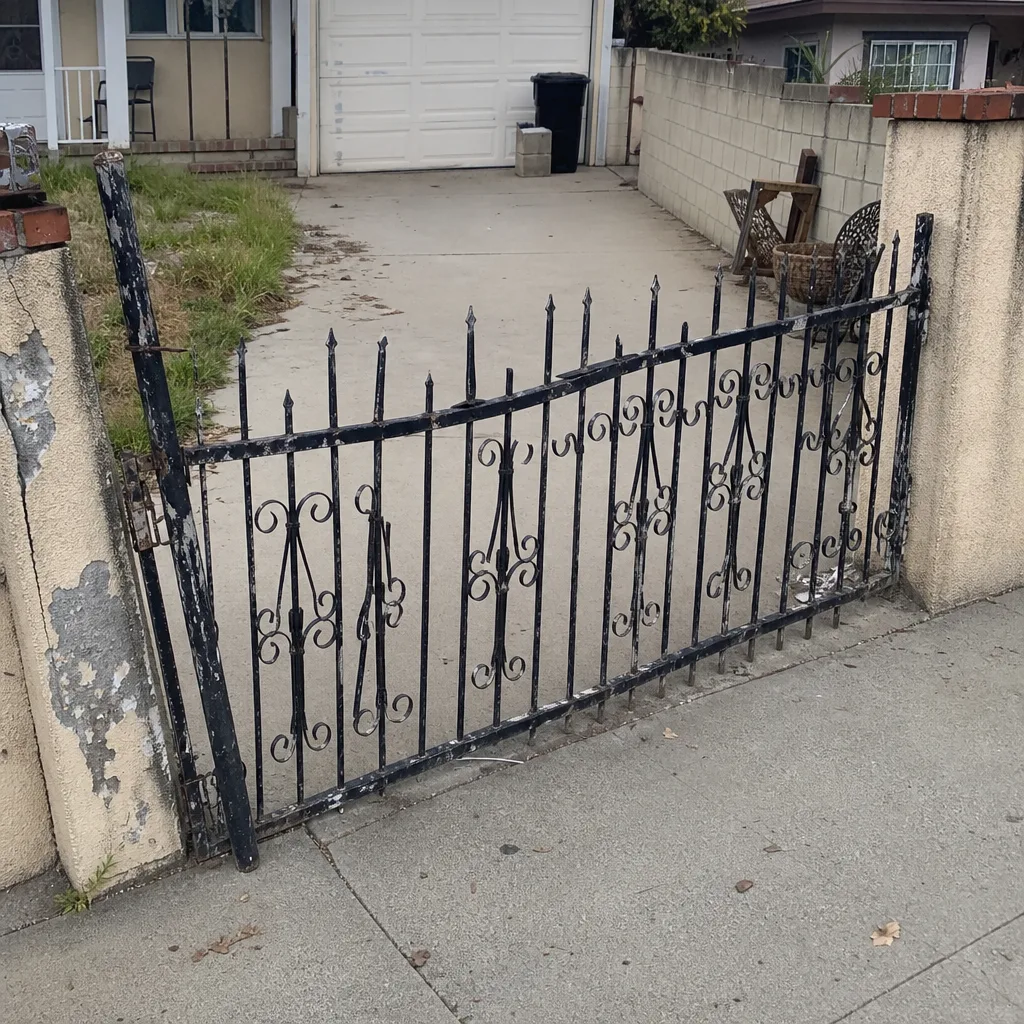 Before
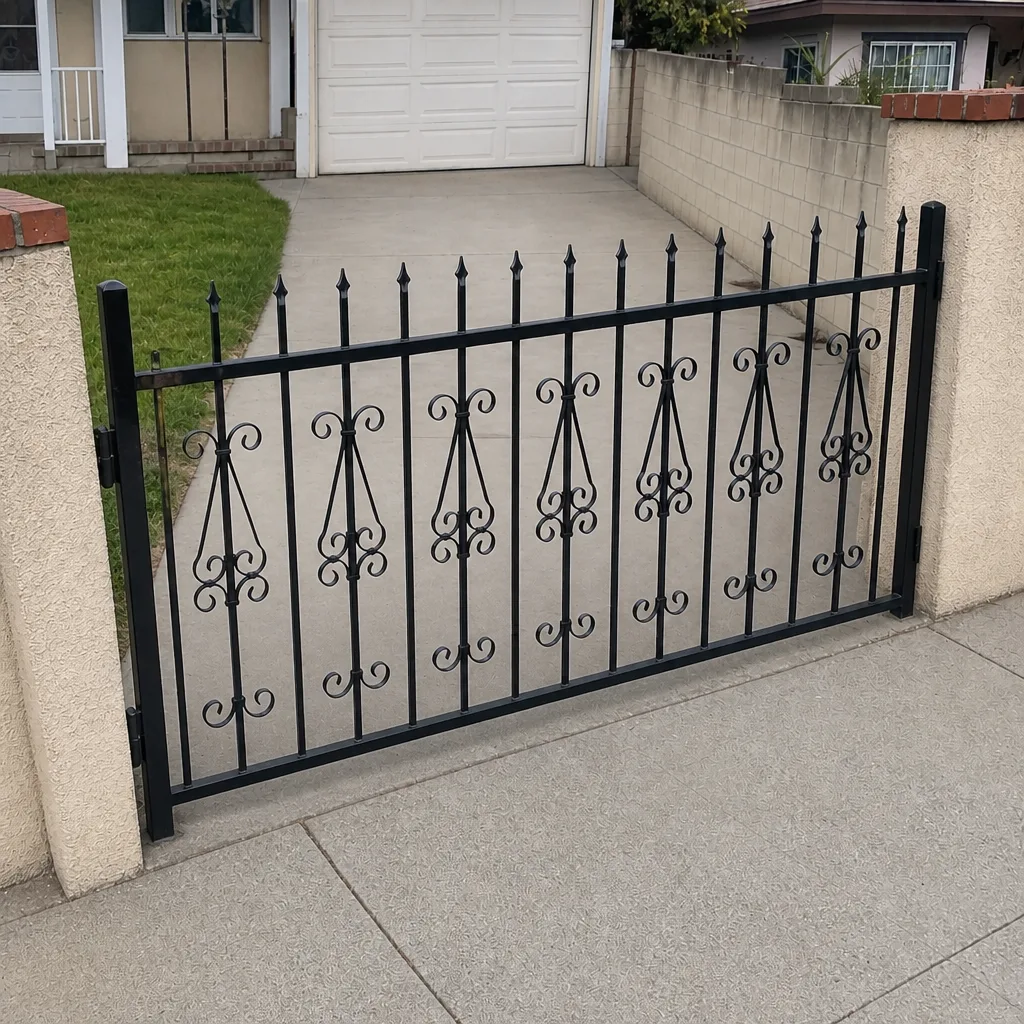 After
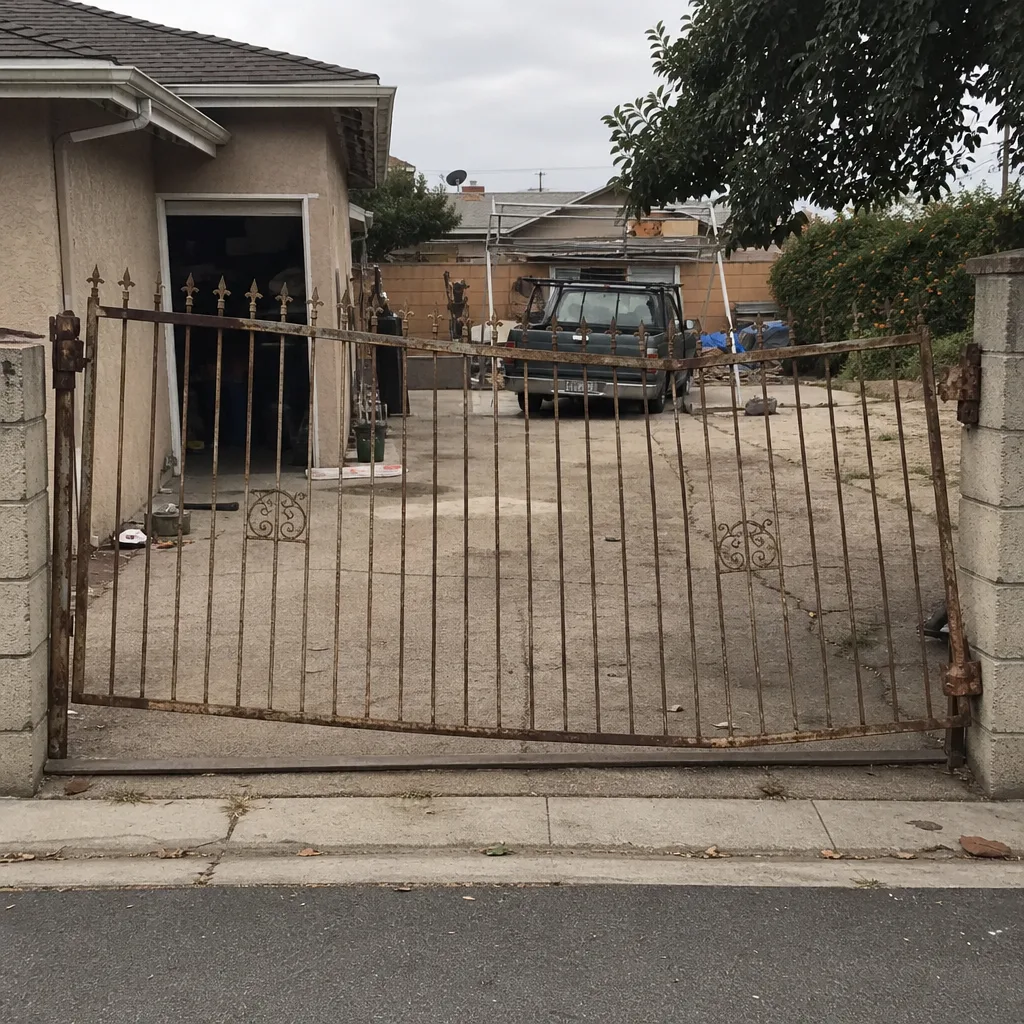 Before
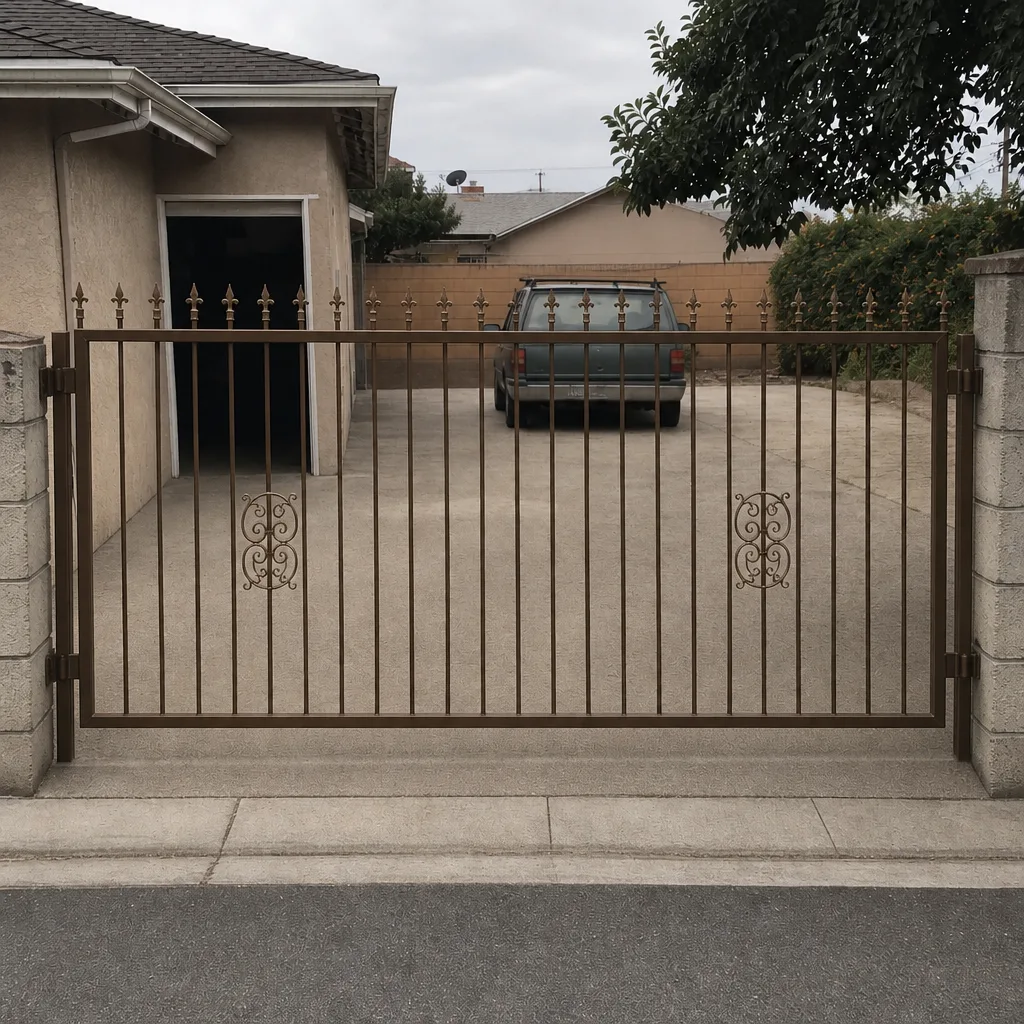 After