
Last updated November 4, 2026
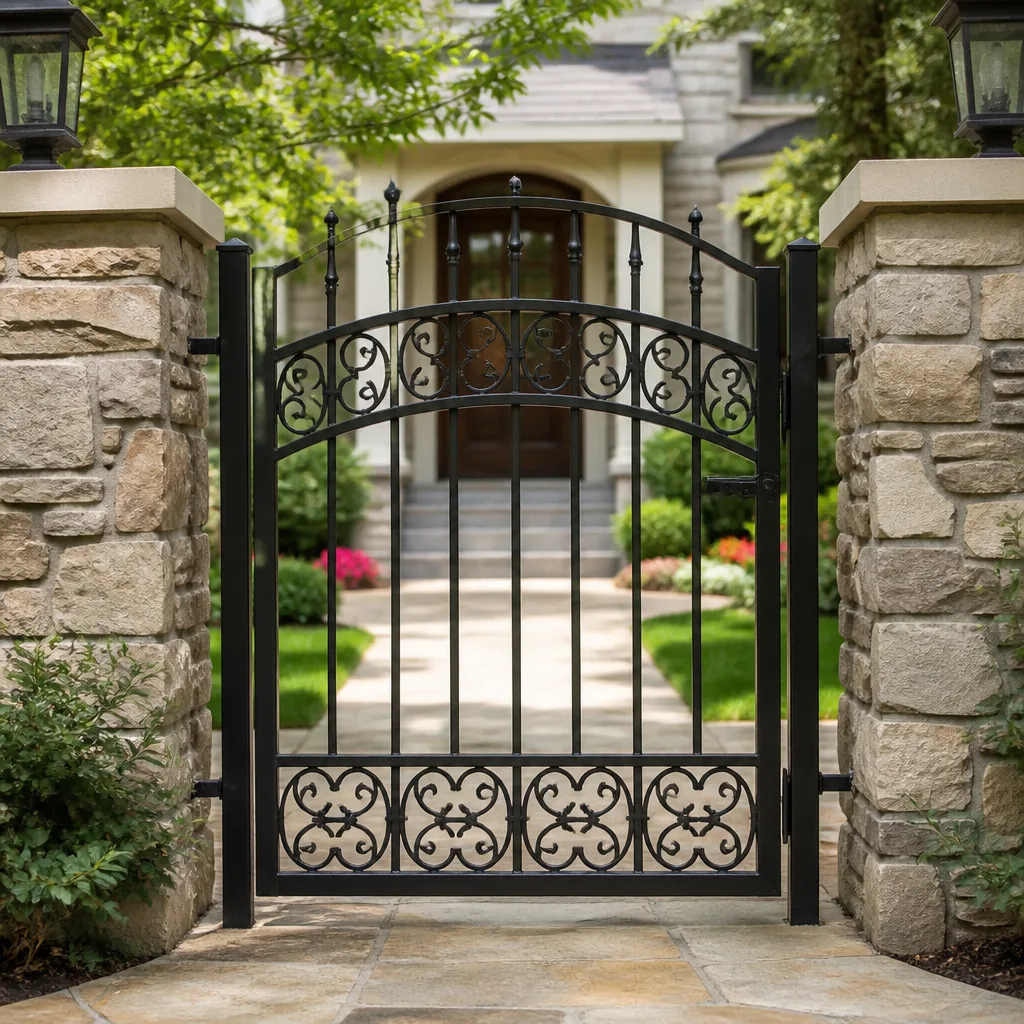 Wrought iron
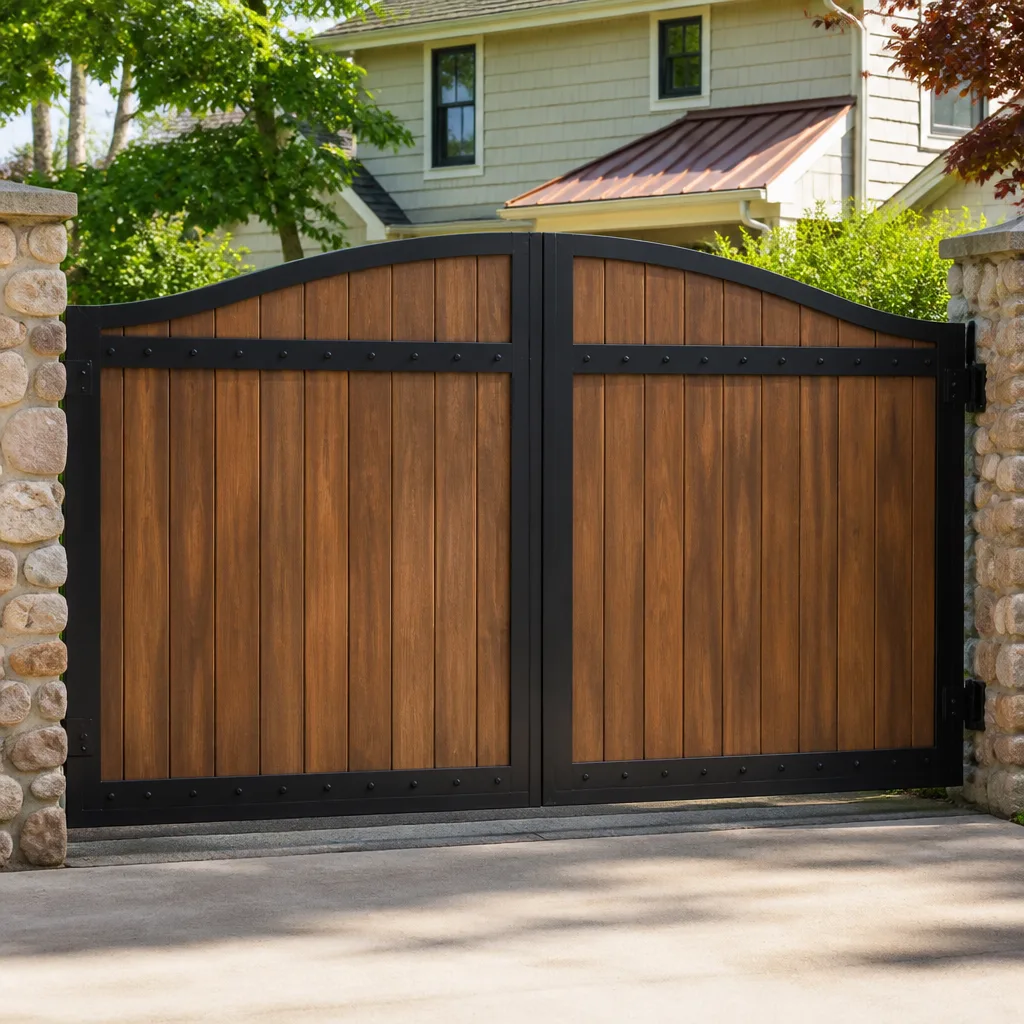 Wood & steel frame
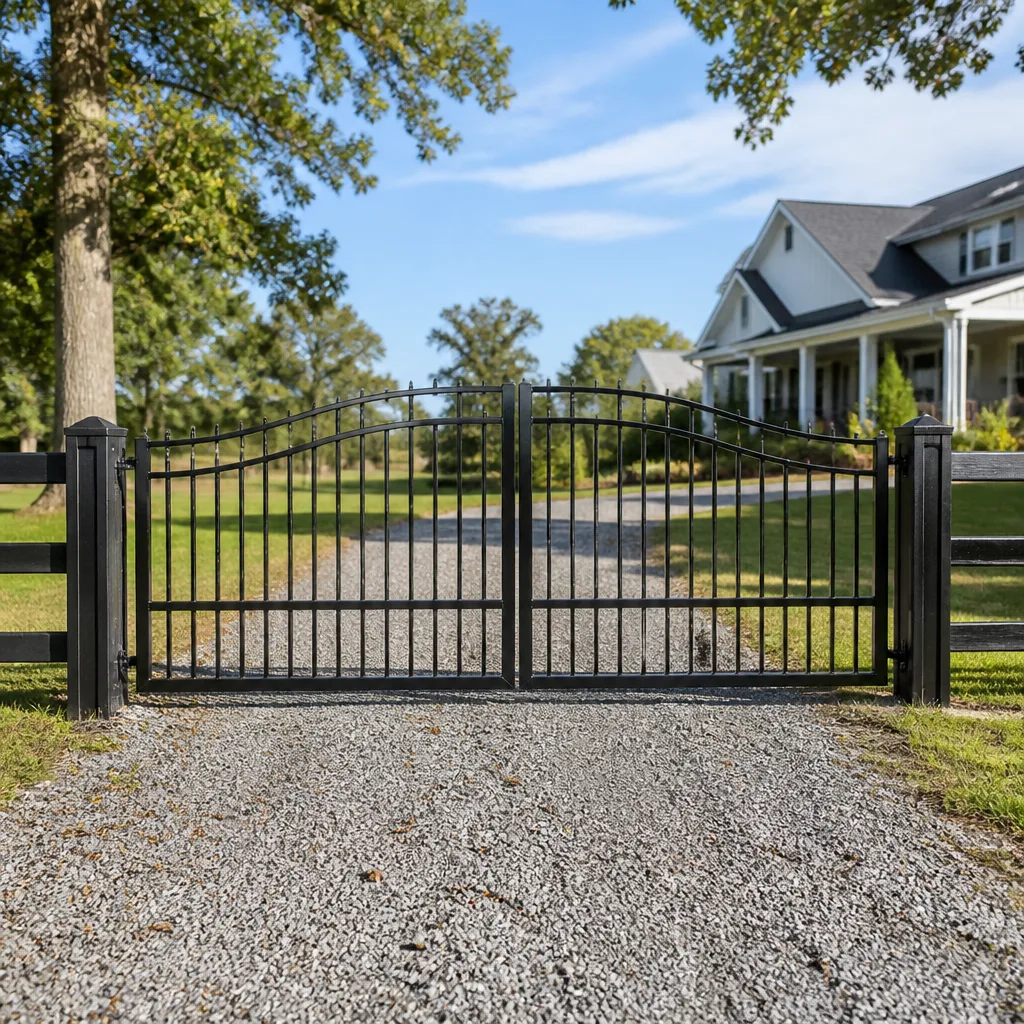 Farm & ranch
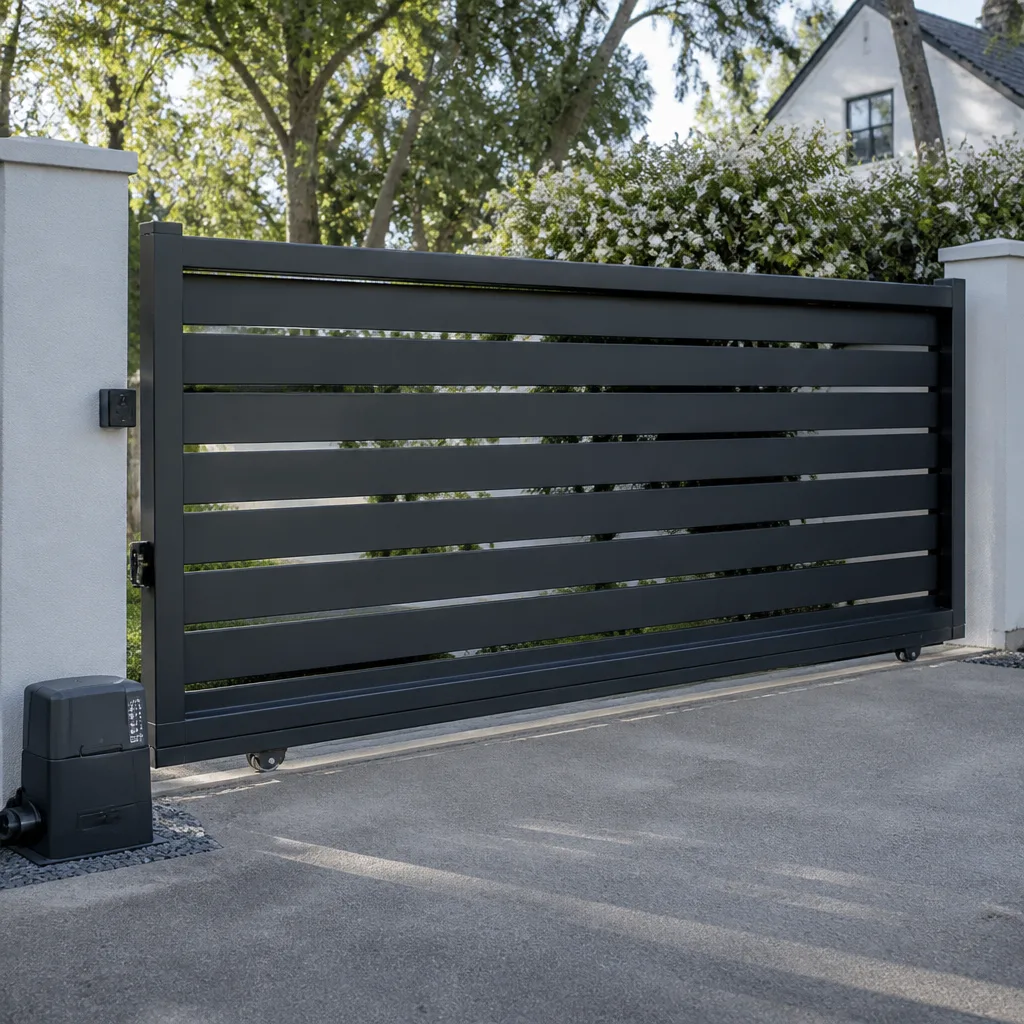 Sliding driveway gates
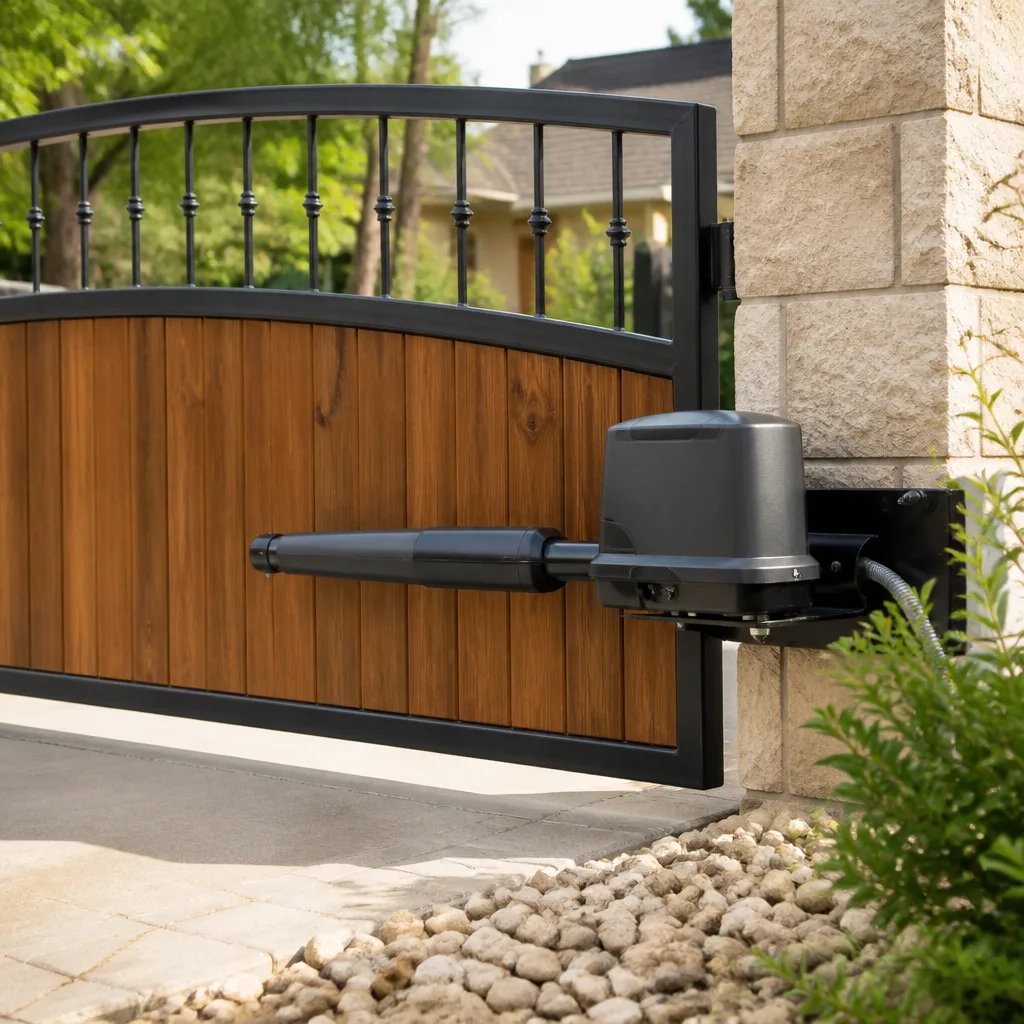 LiftMaster operators
Free on-site gate assessment - hinges, posts, and your LiftMaster or Nice gate operator checked before anything is quoted
The assessment is free and the quote is the invoice.
Get your free estimateGate Repair Troubleshooting in Baldwin Park: Common Problems and How to Fix Them
A gate that reverses before closing isn’t broken. It’s doing exactly what it was programmed to do when the safety loop thinks it detected an obstruction. The obstruction just isn’t visible. That single misconception sends more Baldwin Park homeowners down the wrong diagnostic path than any other gate issue we see. This guide walks you through the failure chain from sensor to solenoid, teaching you to separate electrical faults from mechanical wear and logic errors before you touch a single wire. If you’ve been blaming the motor for every hiccup, you’re about to learn what’s actually going on.
Styles & brands we work with
- Wrought iron
- Wood & steel frame
- Farm & ranch
- Sliding driveway gates
- LiftMaster operators
Quick Answer
Gate repair troubleshooting in Baldwin Park starts with identifying whether the failure is electrical, mechanical, or sensor-related before testing any components. Most gates that won’t open, won’t close, or reverse mid-cycle trace back to a dead safety loop, a misaligned limit switch, or a gate that has shifted weight onto its hinges. A systematic outside-in inspection catches roughly six out of ten issues without touching the control board.
Table of Contents
- How to Classify the Failure Before You Touch Anything
- The Five-Point Physical Inspection That Catches Most Problems
- Brand-Specific Diagnostic Sequences: LiftMaster, Ghost Controls, and Apollo
- Why Baldwin Park Heat Causes Motor Cutoffs and How to Diagnose It
- Safety Sensors, Loops, and Logic Failures Explained
- What’s Safe to DIY and What Requires a Licensed Technician
- What Gate Repair Costs in Baldwin Park
- Common Mistakes to Avoid
- When to Call a Professional
- Frequently Asked Questions
- The Bottom Line
How to Classify the Failure Before You Touch Anything
Every gate failure fits into one of three buckets: mechanical, electrical, or sensor/logic. The symptom looks the same to most homeowners. The fix is completely different depending on which bucket you’re in. Jumping straight to a random test wastes time and often creates a second problem where there was only one.
The outside-in approach works because most gate failures in Baldwin Park happen at the moving parts first. The chain of failure runs from the ground up. A gate that drags on settled concrete puts torque strain on the operator. That strain overworks the motor. The overworked motor trips a thermal cutoff. The homeowner sees the gate stop and assumes the motor is dying. The real problem is three feet below at the hinge post.
Electrical vs. mechanical vs. sensor: how to tell them apart in under five minutes
Mechanical failures almost always announce themselves with sound. A gate that groans, grinds, scrapes, or shudders while moving is fighting physical resistance. The motor is working. Something is in its way. Hinges, rollers, track, ground clearance, or shifted gate weight account for the majority of these sounds.
Electrical failures are silent. The gate simply doesn’t respond to the remote, keypad, or push button. No hum, no click, no movement. Power source, transformer, control board, or wiring connection is the culprit. These failures need a multimeter and a licensed touch. We handle electric gate repair for Baldwin Park and the surrounding area on a daily basis, because silent failures are never simple.
Sensor and logic failures behave inconsistently. The gate starts to close, reverses halfway, and sits there open. Or it beeps but won’t move. Or it closes fully but stays shut and ignores commands. The gate is receiving power and the mechanics are free. The brain has misread its environment. Safety loops, photo eyes, limit switches, and edge sensors are the usual suspects.
- Stand near the gate and listen. No sound equals electrical. Grinding, clicking, or groaning equals mechanical.
- Watch the movement pattern. Stops mid-cycle and reverses without a visible obstacle equals sensor/logic.
- Check the simplest physical points first: hinges, track, ground contact. Most mechanical failures reveal themselves in 60 seconds.
- Only after the physical check is clean should you look at fuses, breakers, and the control board.
Classifying the problem correctly on the first pass saves you from pulling apart a perfectly healthy motor when the only thing wrong is a leaf blocking a photo eye.
The Five-Point Physical Inspection That Catches Most Problems
Before any tools come out, run these five checks. In our experience, a majority of no-movement and slow-movement calls in Baldwin Park resolve at one of these five points. They cost nothing but time and require no electrical knowledge.
- Hinges. Grab the gate near the hinge post and lift. A half-inch of vertical play means hinge bushings are worn. More than that, and the gate is sagging enough to drag. Worn hinges transfer weight to the operator, which then struggles to push against a gate that’s trying to fall.
- Rollers and wheels. For slide gates, look at the wheels. Flat spots, wobble, or wheels that won’t spin freely create resistance the motor fights against. Slide gates also come off their track when wheels wear unevenly, which is one of the most dangerous failure modes we handle.
- Track or ground clearance. A swing gate should clear the ground by an inch or more through its full arc. A slide gate’s track should be free of debris, gravel, and garden material. Baldwin Park’s dry summers bake the ground into a hardpan that can crack and shift slightly, changing ground clearance seasonally.
- Gate weight shift. This is subtle. Over years, a heavy gate slowly pulls its hinge post out of plumb. The gate still looks straight to the eye. But the effective weight the operator must move has increased. If your motor sounds like it’s working harder than it did a year ago, weight shift is the first thing to check after hinges.
- Chain, belt, or drive mechanism. For slide gates, inspect the chain or belt for slack, rust, or missing links. A flapping chain can skip teeth on the drive sprocket, which causes jerky movement that looks like an electrical problem. It isn’t.
Run these five checks in order. Most Baldwin Park residents find their gate problem here without ever opening the control box. When the physical side is clean and the gate still misbehaves, you’ve earned the right to look at the electrical side.
Brand-Specific Diagnostic Sequences: LiftMaster, Ghost Controls, and Apollo
The same symptom means different things on different machines. A gate that reverses before closing on a LiftMaster usually points to a safety input issue. On a Ghost Controls system, the same behavior often traces back to the force adjustment or a weak battery in the remote. On an Apollo, look at the limit switch assembly first. We work on the brand you already have, and the sequence matters.
LiftMaster gate troubleshooting pattern
LiftMaster residential gate operators are built around a control board that logs sensor states. The first diagnostic step is always to check the board’s LED indicators. A solid green power light plus a flashing trouble code narrows the problem to a specific circuit. The most common non-motor failure on LiftMaster gates in Baldwin Park is a safety loop that has gone open. The board interprets an open loop as an obstruction and refuses to close the gate. Check loop continuity before touching the motor capacitor or limit cams.
Ghost Controls troubleshooting pattern
Ghost Controls systems are popular on dual swing gates because they’re solar-friendly and simple. Their weakness is force sensitivity calibration. After a few years of Baldwin Park heat and dust, the operator’s force settings drift. The gate begins to stop short or reverse because the board thinks it hit an obstruction. The fix is a recalibration sequence, not a motor replacement. Also check the battery condition on the remote and the solar panel wiring if the gate shows no response at all. A Ghost Controls gate that works lazily in the morning and dies by afternoon is often a solar panel covered in dust or a failing battery pack.
Apollo gate troubleshooting pattern
Apollo operators use a mechanical limit switch that is vulnerable to heat expansion. During Baldwin Park summer days when the surrounding hardscape radiates heat into the equipment housing, the limit arm can expand slightly and cause the gate to stop a few inches short of full open or full close. The classic symptom is a gate that opens fully but stops two inches before closing, then reverses. Adjust the limit switch travel slightly before suspecting the control board. Apollo units also benefit from a clean power supply: a brown-out from the grid during peak afternoon demand can cause erratic behavior that vanishes at night.
Why Baldwin Park Heat Causes Motor Cutoffs and How to Diagnose It
Baldwin Park sits in the San Gabriel Valley, where summer afternoons regularly push past the mid-90s. Gate operator motors are mounted inside metal housings that absorb direct sun. The internal housing temperature can run 30 to 40 degrees hotter than the air temperature. That’s enough to trip a thermal overload switch.
A thermally overloaded motor stops dead. No warning, no sound. Wait 20 to 30 minutes, reset the breaker or let the unit cool, and the gate works again. The homeowner thinks the gate is failing. The heat is simply doing what the thermal sensor was designed to do. It’s protecting the motor from cooking itself.
How to tell thermal cutoff from a failing capacitor or a dying motor:
- Thermal cutoff happens consistently on the hottest afternoons, especially when the gate has cycled more than usual. The gate recovers after cooling and runs fine in the morning.
- Failing capacitor causes a hum without movement. The motor tries to start but can’t. This happens regardless of time of day or temperature.
- Dying motor moves slowly at all times, runs hot to the touch even on cool days, or smells like burnt insulation. Once a motor winding begins to fail, it never recovers.
If your Baldwin Park gate shuts down between 2pm and 6pm on hot days and runs at 8am, you’re likely dealing with thermal protection, not a mechanical failure. Improve ventilation around the operator housing, check that the housing isn’t pressed against a stucco wall that radiates heat, and reduce unnecessary cycles during peak heat. If the gate hums without moving at 8am too, you’re looking at the capacitor or the motor itself, and that’s a different repair path entirely.
Safety Sensors, Loops, and Logic Failures Explained
The modern gate operator is a logic machine first and a motor second. It makes decisions based on inputs from safety devices. When the inputs are dirty, damaged, or misaligned, the gate makes bad decisions and you see symptoms that look mechanical but aren’t.
Photo eyes are the paired sensors on either side of the gate opening. They send an invisible beam between them. Break the beam and the gate stops or reverses. A dirty lens, a spider web, a blade of grass, or simple misalignment sends a permanent “obstruction” signal. The gate refuses to close. Clean both lenses with a soft cloth, check alignment, and watch for wiring that’s been chewed by rodents. This single fix resolves more “the gate won’t close” calls in Baldwin Park than any other sensor repair.
Safety loops are wires buried in the driveway on either side of the gate. They detect the metal mass of a vehicle. The exit loop tells the gate to open when a car pulls up. The reverse loop keeps the gate open while a car is in its path. A broken loop behaves like a dead sensor: the gate may refuse to close, or it may close on a car that’s sitting in the opening. Loop failures are common in Baldwin Park driveways that have been resurfaced, trenched for irrigation, or settled over time. The fix usually means cutting a new loop into the driveway and splicing it into the control board.
Limit switches tell the gate where “open” and “closed” actually are. A gate that slams open hard or closes too far has a limit switch that’s either failed or drifted. Mechanical limit cams wear over time. Reed switches accumulate fine dust and stop triggering. The fix is an adjustment or a replacement, not a new gate.
Edge sensors are the rubber strips on the leading edge of the gate. They’re pressure-sensitive. If the gate hits something, the edge sensor tells the board to reverse. A hardened, cracked, or waterlogged edge sensor can trigger without contact. In Baldwin Park’s dry summer air, rubber edges lose flexibility after a few summers and begin sending false positives.
What’s Safe to DIY and What Requires a Licensed Technician
Some gate maintenance is homeowner work. Some of it is genuinely dangerous. The line is clear once you understand what you’re looking at.
Safe to handle yourself:
- Cleaning photo eye lenses and checking alignment
- Clearing debris from slide gate tracks and rollers
- Tightening visible hinge and bracket bolts that are loose
- Checking remote and keypad batteries
- Resetting a tripped breaker and verifying power at the outlet
- Lubricating hinges and rollers with a silicone-based spray
Do not attempt yourself:
- Adjusting or replacing high-tension gate springs. A gate spring under load carries enough force to seriously injure you if it releases unexpectedly.
- Working inside the control box with power live. Capacitors store voltage even after the breaker is off.
- Rewiring loop detectors, limit switches, or the operator’s power feed. One crossed wire can fry a control board that costs several hundred dollars to replace.
- Lifting or re-hanging a gate that has come off its hinges or track. A heavy gate that falls while someone is underneath it is a crush hazard.
- Replacing a slide gate wheel while the gate is still in its track. The gate can roll forward and pin you against the post.
If you’re holding a tool in one hand and wondering whether you should be doing this, put the tool down and call. A trained technician running through gate repair in Baldwin Park costs less than a hospital visit or a fried control board. When it comes to spring tension and high-voltage wiring, the professional route is the only route.
What Gate Repair Costs in Baldwin Park
Baldwin Park gate repair pricing depends on the failure type, the brand, and the parts involved. Here’s what you can expect for typical repairs in the local market. These are estimated ranges. Your written estimate is the final word.
- Photo eye realignment or cleaning: $85 – $150. Typically a same-visit fix.
- Limit switch adjustment or replacement: $120 – $260, depending on the brand and whether the switch is mechanical or magnetic.
- Safety loop replacement: $400 – $900. This includes cutting the driveway, laying new loop wire, sealing the cut, and splicing into the board.
- Control board replacement: $350 – $850, depending on the brand. A LiftMaster or FAAC board runs more than a Mighty Mule board.
- Capacitor replacement: $90 – $200. A quick fix that resolves the hum-without-movement symptom.
- Gate hinge replacement or repair: $200 – $600, depending on gate size and how much the gate has sagged.
- Full operator replacement: $1,200 – $3,500, including the new motor, installation, and safety sensor integration.
Every estimate comes free from Gate Repair Baldwin Park. The price is quoted and agreed before any work starts, so the invoice never surprises you. Call (855) 679-6795 and we’ll get you a written number.
Common Mistakes to Avoid
- Replacing the motor first. The motor is rarely the root cause. Replacing it masks the real problem and the gate fails again in weeks.
- Ignoring the hinge post. A gate that’s sagging puts stress on every other component. Fix the post or the hinges before touching anything electrical.
- Cleaning photo eyes with glass cleaner. Ammonia-based cleaners leave a film that fogs the lens in Baldwin Park’s dry, dusty air. Use a dry microfiber cloth.
- Adjusting limit switches without marking the original position. You’ll lose the reference point and make the problem worse. Always mark before you move.
- Skipping the free estimate. A professional diagnostic costs nothing here and prevents a wrong guess that could burn out a board or a motor.
- Running the gate manually without disengaging the operator. You’ll fight the motor’s resistance, which feels like a mechanical problem and risks burning the clutch.
- Treating a thermal cutoff as a breakdown. A gate that shuts off on hot Baldwin Park afternoons and recovers by morning needs ventilation, not an emergency repair.
When to Call a Professional
Call a gate technician when the physical inspection turns up clean and the gate still misbehaves. Call when you hear grinding that you can’t trace. Call when the gate has come off its track or fallen toward the ground. Call when you smell burning near the operator. Call when the control board shows fault codes you don’t understand. Call before you open the electrical box if you don’t know how to discharge a capacitor safely.
Gate Repair Baldwin Park offers free estimates in Baldwin Park. We’re a gate-only company serving Baldwin Park and the surrounding San Gabriel Valley. Whether it’s a Mighty Mule on a driveway or a FAAC system on a commercial lot, we diagnose right the first visit. Call (855) 679-6795 and we’ll send someone out.
Frequently Asked Questions
Your gate is reversing because a safety input is sending an obstruction signal. The most common cause in Baldwin Park is a dirty or misaligned photo eye, a false-triggering edge sensor, or a safety loop that has gone open. Clean and align the photo eyes first, then check the edge sensor rubber for cracking. If the gate still reverses, the loop or the board is the next link in the chain. Call (855) 679-6795 for an exact diagnosis. Estimates are free.
Listen to the gate. A gate that hums, grinds, clicks, or struggles while moving is fighting a mechanical problem. A gate that sits silent when you press the remote is an electrical failure. A gate that starts, stops, and reverses erratically is usually a sensor or logic fault. Classify by sound and behavior before opening anything. That sequence saves time and prevents misdiagnosis.
Most mechanical and sensor repairs can be handled same-day. Electrical failures that require a replacement board or a re-cut safety loop may need a day to order parts. Call (855) 679-6795. We answer 24/7. Fast dispatch from 7am to 7pm, Sunday through Friday.
A full installation includes the gate itself, posts set to proper footing depth, hinges, the operator (if it’s an automated gate), safety sensors, loops, control board, and any needed electrical work. The estimate covers everything up front. You see the final number before we start. Call (855) 679-6795 for a free measure and a written price.
Your motor’s thermal overload switch is tripping. The metal operator housing absorbs direct summer sun and the internal temperature climbs past the motor’s safe limit. When it cools down, the overload resets and the gate works again. Improve ventilation around the housing and reduce unnecessary cycles during the hottest part of the day. If the gate also hums without moving in the morning, that’s a capacitor or motor issue, not heat.
No. Gate springs under tension can release with enough force to cause serious injury. This is not a homeowner repair. A licensed technician has the tools and the experience to handle spring tension safely. Call (855) 679-6795 and we’ll handle it.
The Bottom Line
Most Baldwin Park gate failures are simpler than they look. A physical inspection at the hinges, track, and ground clearance finds the problem more than half the time. When the physical side is clean, the fault lives in the sensor network or the electrical feed. Classify the failure first, trace it methodically, and don’t touch a wire unless you’re sure and trained. When the fix goes beyond your comfort zone, Gate Repair Baldwin Park handles the full lifecycle from a broken spring to a full electric operator. Your gate specialist, not your general handyman.
Written by the team at Gate Repair Baldwin Park, serving Baldwin Park since 2015.
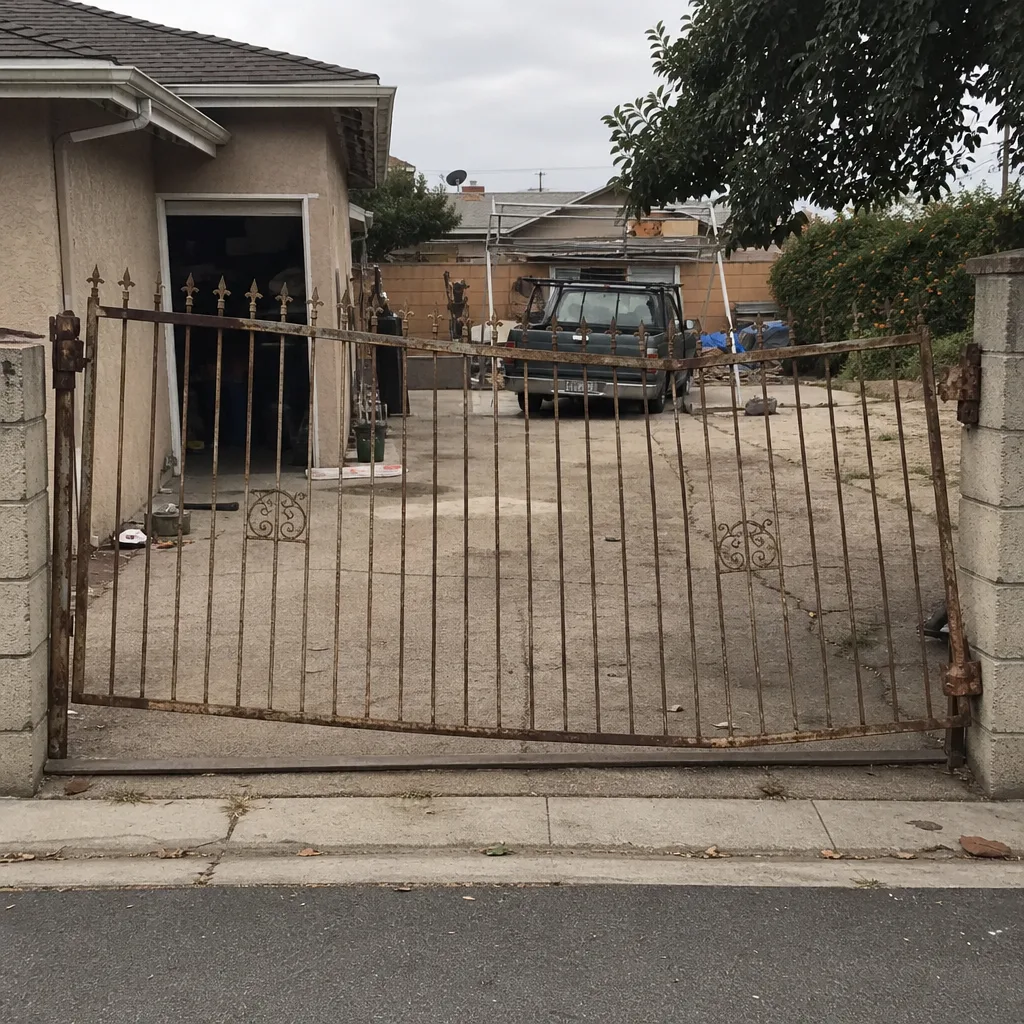
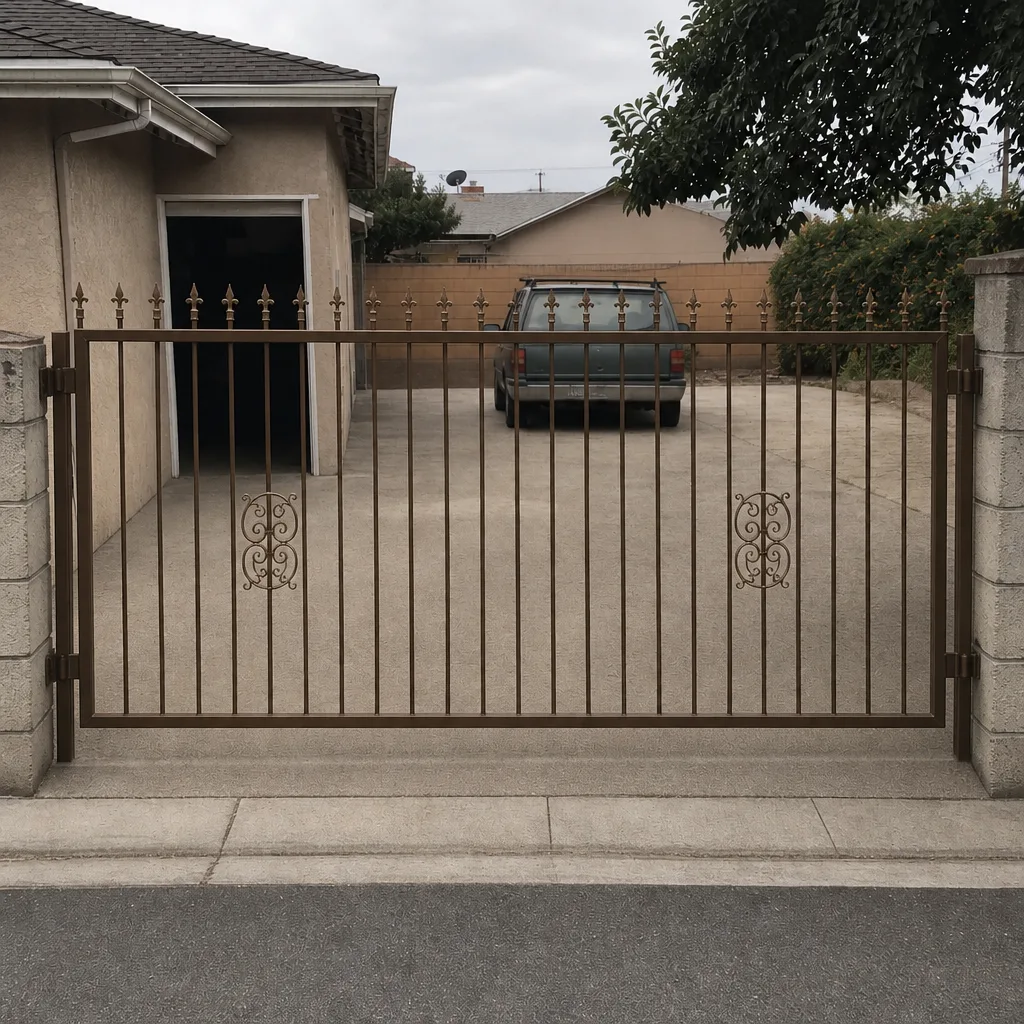
See the difference
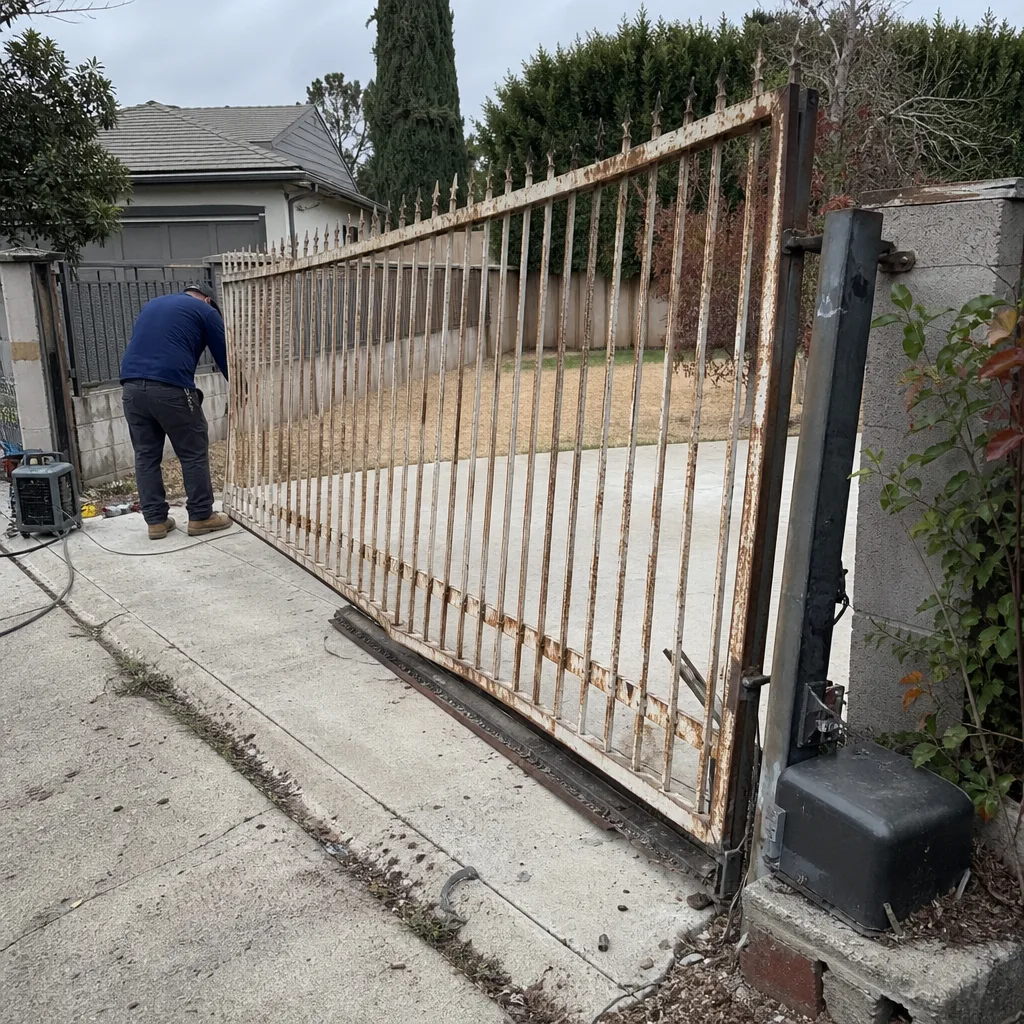 Before
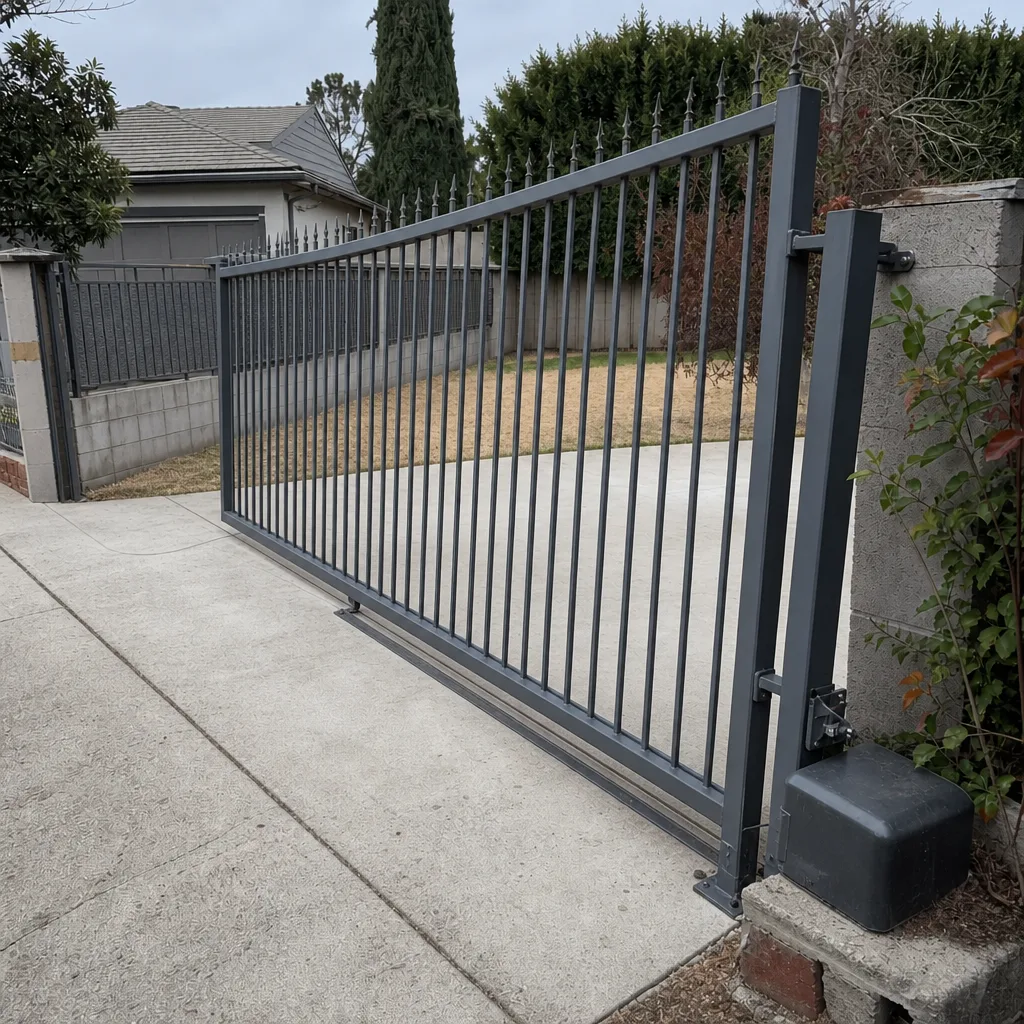 After
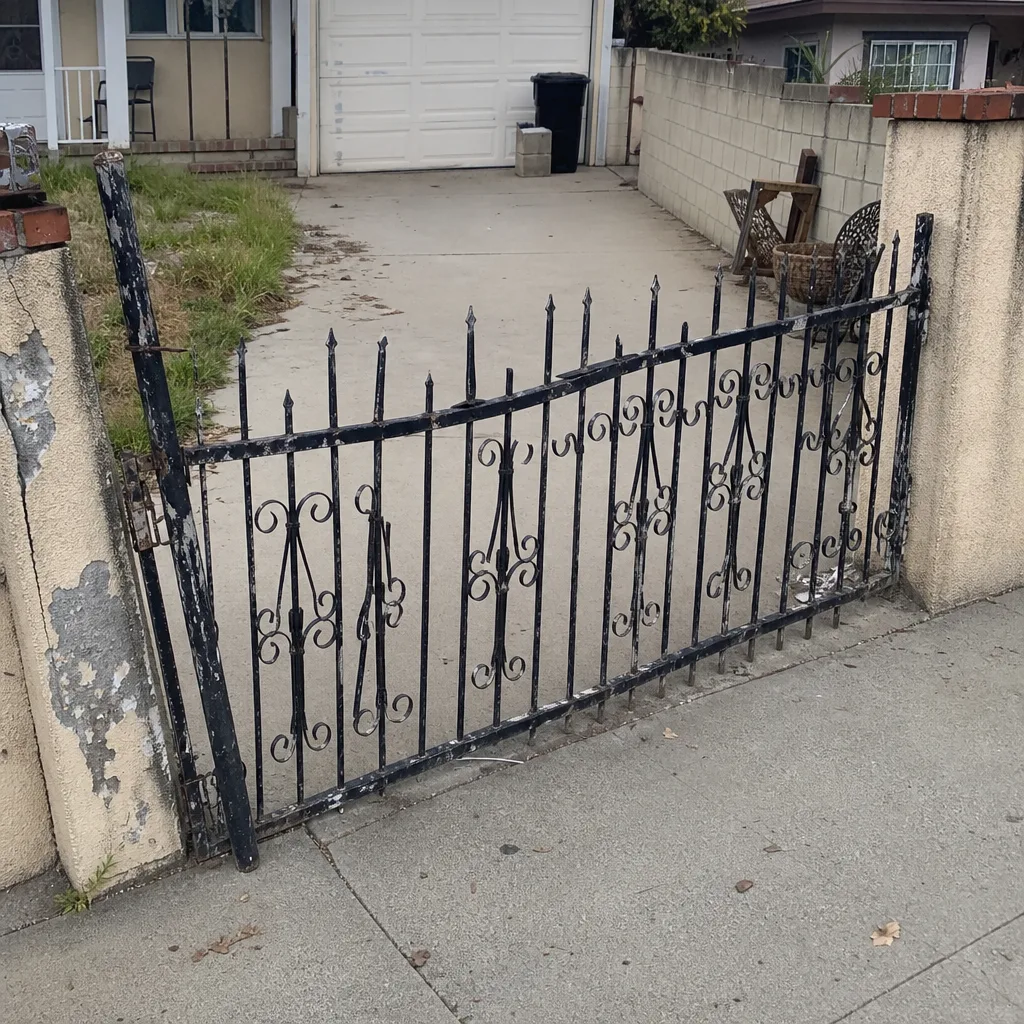 Before
 After
 Before
 After